
Resistance Band Storage and Organization
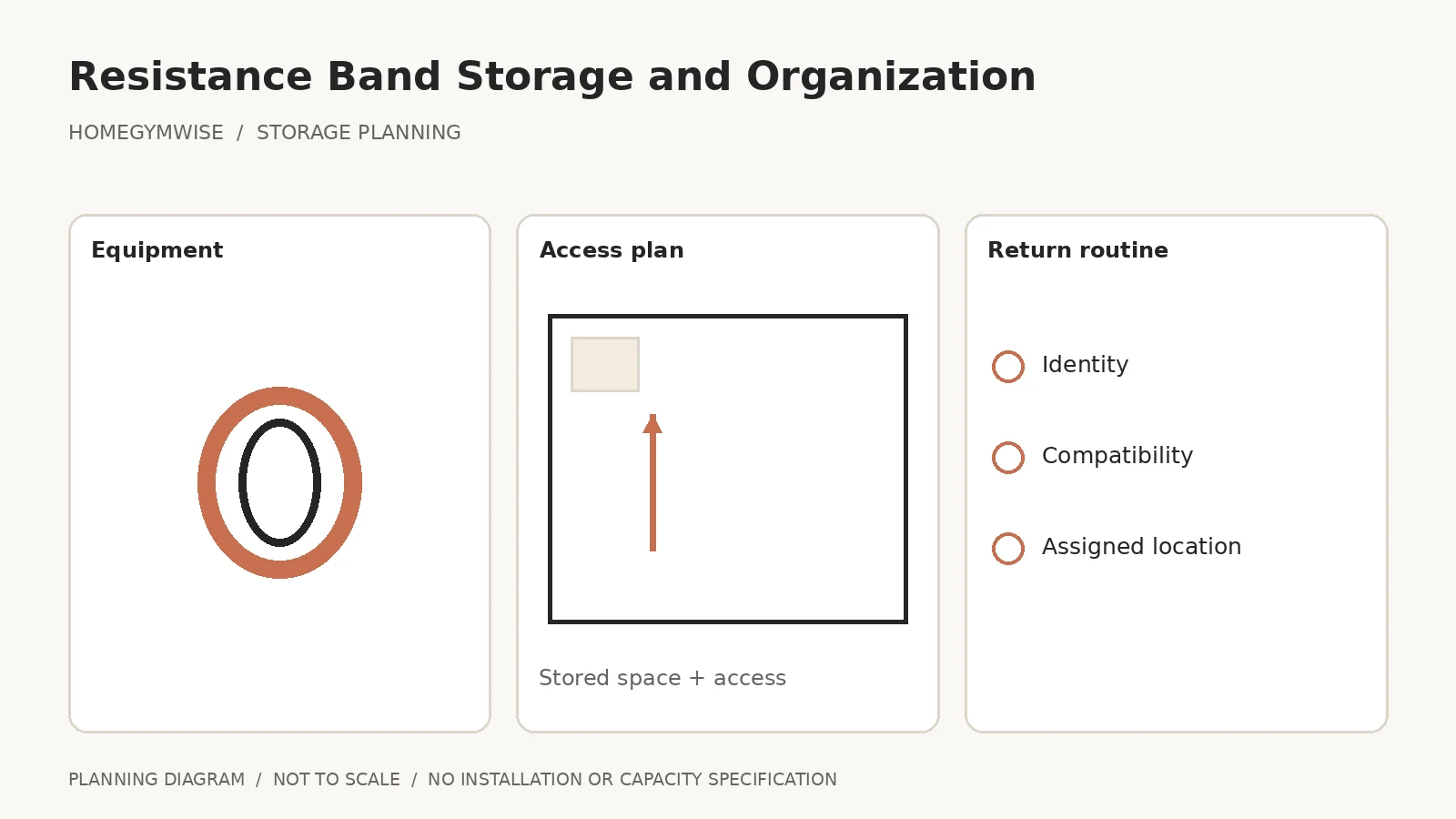
Sort resistance bands before choosing a storage spot
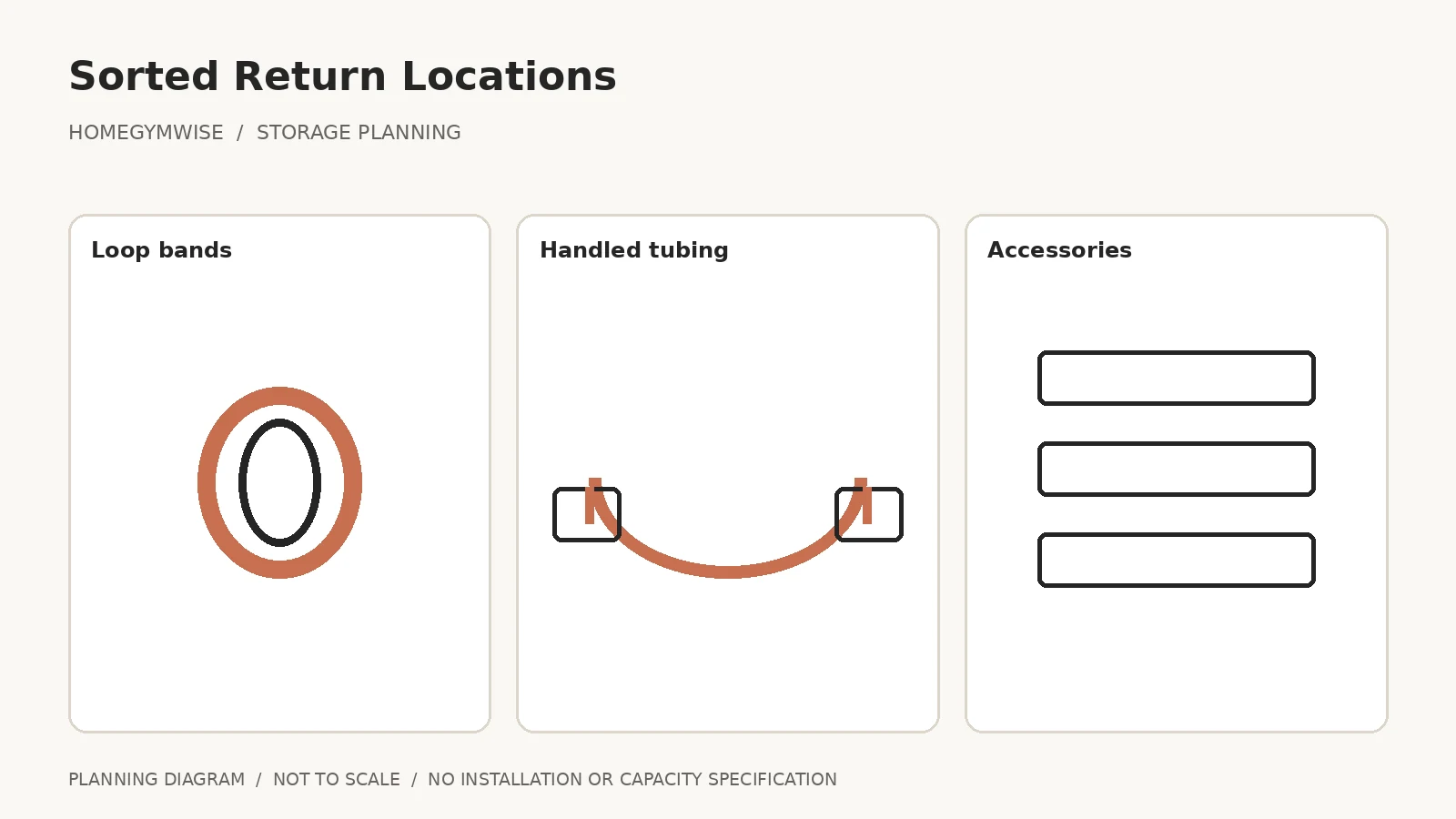
Sort resistance bands by their actual type and identity before choosing a storage arrangement. Loop bands, handled tubing and their accessories need recognizable return locations; a single bundle makes it harder to find the item you intended to use.
Keep each product’s care instructions with its identity. Color alone is not a dependable way to compare resistance across brands, and a storage method suitable for one material should not automatically be transferred to another.
The goal here is easy identification and manufacturer-led storage care. Exercise programming, homemade training ancho rsand general gym decluttering belong elsewhere.
Give each band a separate return location
Give each band an assigned place that makes returning it simple.
- Separate loop bands, handled tubing and accessories.
- Label locations by the identity you actually use to find the item, such as its product/type and marked resistance.
- Keep compatible accessories identifiable without assuming they may remain attached during storage.
- Leave enough visible separation to recognize which item belongs where.
A divided box can make sense when the product permits that storage method. A hanging arrangement may make identification easier when hanging and the contact surfaces are permitted. Neither is a universal answer for every band.
Avoid creating the arrangement by knotting bands, stretching them into position or using an undocumented contact method. Those changes should not be treated as harmless organization tricks. You are assigning return locations, not fabricating a load-bearing exercise anchor.
Choose a box or hanging arrangement by care requirements
Choose the location and format together. The arrangement should meet the actual product’s care guidance as well as your access needs.
Performance Health’s CLX guidance permits a box or dark hanging location for CLX and warns against direct sunlight or heat. Those instructions are scoped to that product; they are not a care standard for every band material.
| Requirement | Question that changes the choice |
|---|---|
| Permitted storage method | Does this product allow the proposed box, hanger or supplied component? |
| Environmental exposure | Does the location meet the product’s light, heat and moisture guidance? |
| Identification | Can you recognize the intended band without emptying the whole arrangement? |
| Accessories | Must attachments be detached or stored separately? |
Do not borrow a cleaning chemical or powder recommendation from another material. If the care instructions are missing, keep that decision unresolved rather than guessing from appearance.
Build a short after-use storage routine
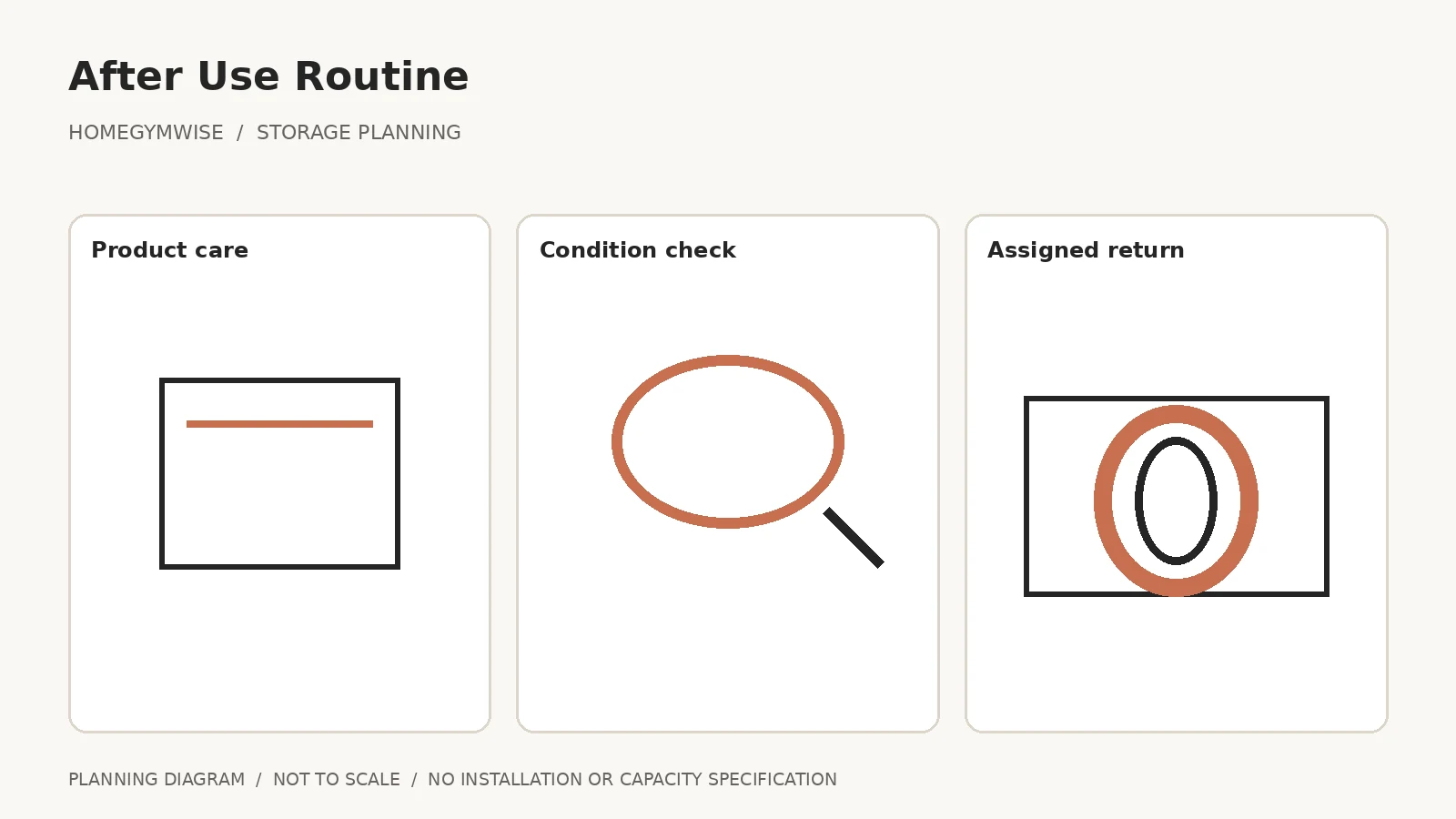
Make the after-use routine short: complete the applicable care steps, check the item’s condition, then return it to its assigned place. Include any required drying before storage; the method belongs to the actual product.
CLX guidance specifically tells users to detach accessories before storing it. Keep that named instruction scoped instead of assuming every attachment has the same storage rule.
If you find damage or a condition you cannot assess, keep the item out of the ready-to-use group while you resolve it through the manufacturer’s guidance. A forceful pull test is not a substitute for that decision, and this routine does not guarantee a band lifespan.
The useful result is a clear distinction between available items and those needing attention, rather than a tidy container that hides an unresolved condition.
Recheck the system when bands or accessories change
Review the storage arrangement when you add a new material, brand or accessory. Its care requirements may change the permitted format or location, even if it fits an empty compartment.
Keep labels current and reserve a separate place for items awaiting guidance. Avoid relying on color alone when different brands or types share the same storage area.
For organizing the surrounding equipment, use the home gym storage ideas overview. Your next step for bands is smaller: assign identifiable return locations, resolve each product’s care requirements and use the same short routine after each session.

2 Comments