
Small Apartment Home Gym Setup Checklist: Start With These First

Before buying equipment, check that your apartment can support the workout you want to do—and return to normal afterward. Start with one realistic session, the room it will use, the rules that apply, and a storage home for each item.
You do not need to solve every future equipment decision now. You do need to resolve the questions that could make the first setup unusable: permission, space in use, delivery, equipment instructions, disturbance, and putting everything away.
Start with one workout, not a shopping list
Write down a session you already know how to perform and want to repeat. List the functions it needs: open floor, resistance, a suitable exercise surface, or a place for cardio equipment. Match the setup to your ability and routine; this checklist is not an exercise program.
Separate needed for that session from useful later. If a second item adds variety but does not solve a missing function, leave it off the first purchase list.
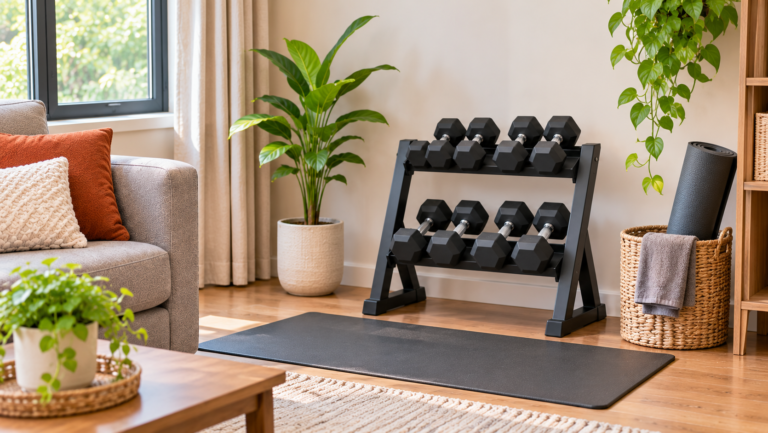
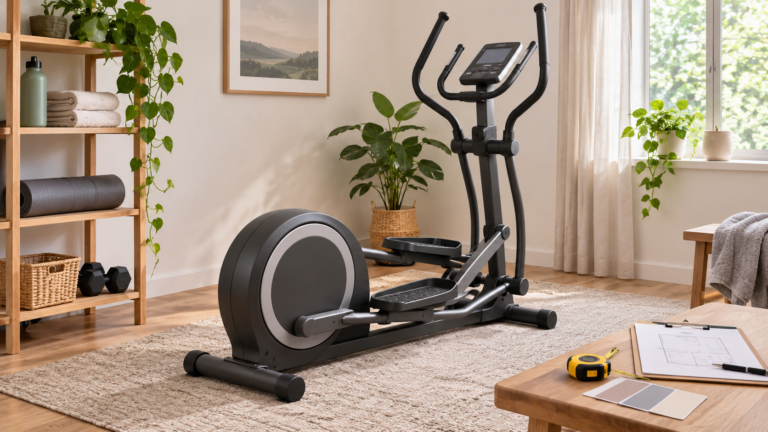
For example, someone planning floor exercises and portable resistance work may start by checking a clear area and storage for a small accessory set. Someone planning to use a powered machine has additional placement, delivery and electrical requirements to verify. Neither example is a universal starter kit.
Check permission, household use, and the delivery route
Read the lease, owner instructions and building rules that apply to your apartment. Look for restrictions relevant to the proposed setup, such as alterations, drilling, noise, floor coverings, deliveries or shared areas. General advice cannot grant permission for your building.
Resolve the question that applies to the item rather than asking only whether a “home gym” is allowed. A portable mat, a wall-mounted fixture and a large powered machine raise different questions.
- Permission: Is the proposed installation or alteration permitted? Get a property-specific answer when the documents are unclear.
- Household use: When will the area be available, what may move, and when must it return to everyday use?
- Delivery: Check the building entrance, stairs or elevator, hallway turns and room doorway against the packaged dimensions and assembly requirements.
- Building concerns: Take unresolved structural or electrical questions to the appropriate property representative or qualified professional. A product’s weight alone does not establish suitability for your floor.
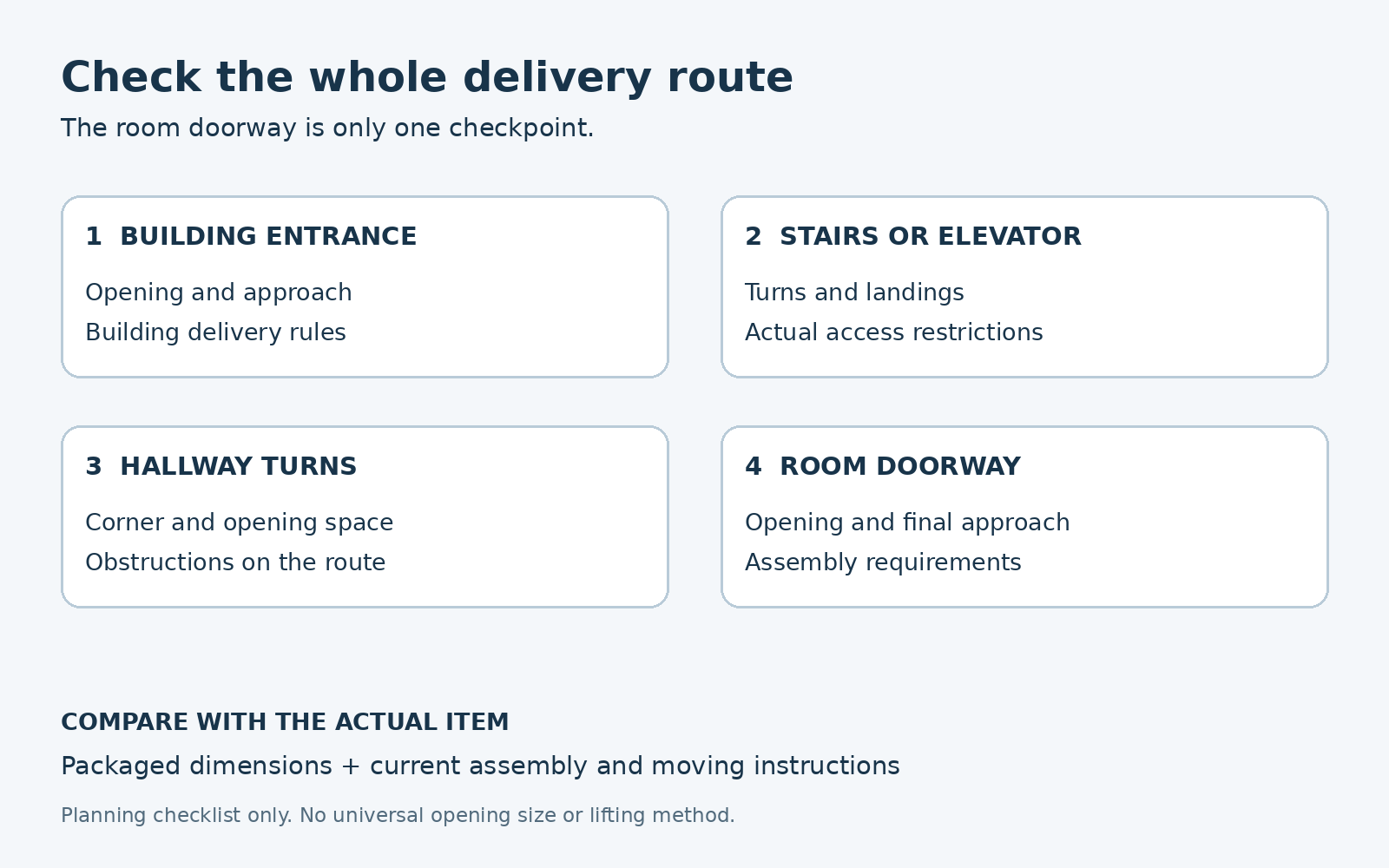
Keep the answer or instruction with your shopping notes. An unresolved permission or delivery problem is a reason to wait on that item, even if the room looks large enough.
Check the room in use and in storage
The stored footprint describes the space occupied when equipment is put away. The active-use area also needs to account for your movement, access, adjustments and manufacturer-required clearances. Check the transition between those states too: where will you stand to retrieve, unfold or move the item?
Make a simple spatial check before shopping:
- Mark the proposed workout area with a method suitable for the floor finish. Keep markers flat and out of walking paths.
- Without weights, resistance or powered equipment, slowly trace the movements and positions you intend to use.
- Check doors, furniture, ceiling fixtures and the route other people need through the room.
- Mark the proposed storage location and the route between storage and use.
- Compare the sketch with the actual equipment’s current instructions before relying on it.
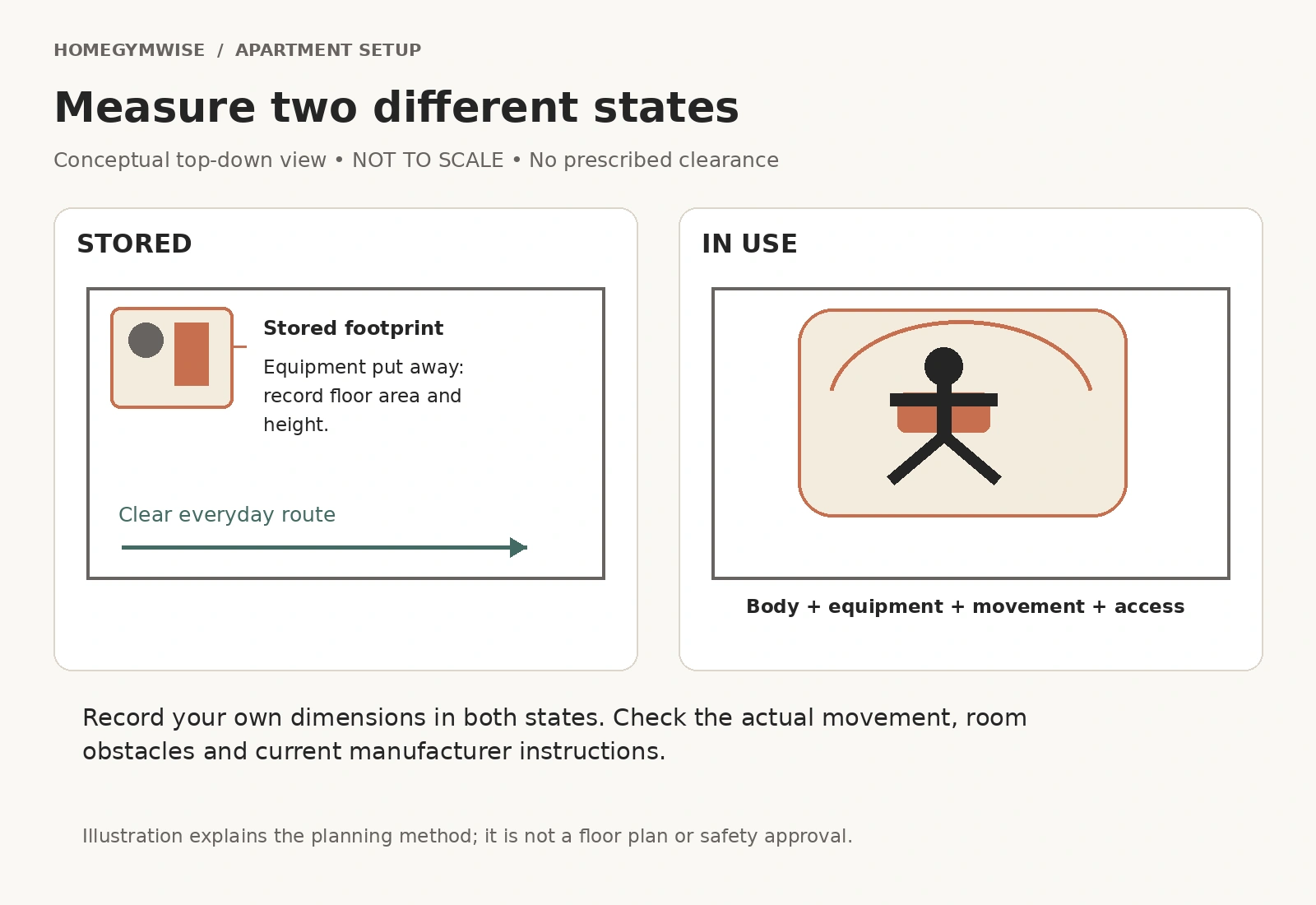
This is a spatial check, not proof of equipment stability, exercise safety or manageable lifting. For a measured room plan and contrasting layout patterns, small home gym floor plans cover that decision in more detail.
Screen the floor, disturbance, power, and airflow
Keep these checks separate. Physical fit does not settle them.
| Check | What to establish before adding an item |
|---|---|
| Floor and surface | The actual surface is compatible with the equipment and proposed floor covering, following their instructions. Do not infer a load limit from a generic online rule. |
| Disturbance | Your planned activity and timing work with the building rules and the people affected. Do not assume a mat makes impact or machine noise acceptable. |
| Power | The actual model’s electrical requirements can be met without an unapproved cord, outlet or circuit arrangement. Ask a qualified electrician when needed. |
| Airflow and room use | Equipment does not obstruct required vents or openings, and normal room access remains available. |
Manufacturer instructions can change the decision. For example, Horizon Fitness’s treadmill placement guidance covers placement, clear areas, power and moving restrictions. It is a reminder to read the actual model’s instructions, not a rule for every machine.
During ordinary use, avoid dropping equipment or striking walls and furniture. Agree on workable hours and ask about disturbance rather than treating a quiet spot inside your apartment as proof that neighbors hear nothing. Detailed flooring selection and noise remedies deserve their own checks; do not solve them by buying an accessory with an unsupported promise.
Choose a small first setup you can repeat
For each proposed item, record the job it performs, where it will be used, where it will be stored, and the total cost of getting it ready to use. Include any required accessories, delivery or installation when applicable; no particular budget or item count is necessary.
Use this decision rule:
- Buy or use it now: it fills a real function, fits both states, and its requirements are resolved.
- Wait: a measurement, instruction, permission or handling question is still open.
- Leave it out: it duplicates something you can already do or creates more setup work than you want to accept.
As a planning example, if portable accessories cover the session you chose, test that arrangement before reserving space for a permanent machine. If a machine is central to the session, verify its full requirements before buying the smaller extras around it.
Give everything a home, then test the whole routine
Assign a specific storage location to each item. Check that you can retrieve and return it without unloading unrelated household belongings or leaving gear in a walking route. Follow its storage instructions; “foldable” does not establish an approved position or make handling easy for every person.
Home gym storage ideas for small spaces can help with the choice of organizers. Here, the important result is a room that works before, during and after the session.
Once the equipment is available and all requirements are resolved, use it as instructed for a normal session you are comfortable performing. Notice four things:
- Setup: What had to move, and what was awkward to reach?
- Use: Did the planned positions, adjustments and access actually work?
- Disturbance: Was there contact, noise, vibration or a household conflict to address?
- Reset: Could every item return to its assigned home?
Change the specific obstacle and repeat the check. A setup that fits but is awkward to put away has a storage or handling problem; one that disturbs neighbors needs a different response. This is a personal observation routine, not a laboratory performance test.
Copyable apartment home gym readiness checklist
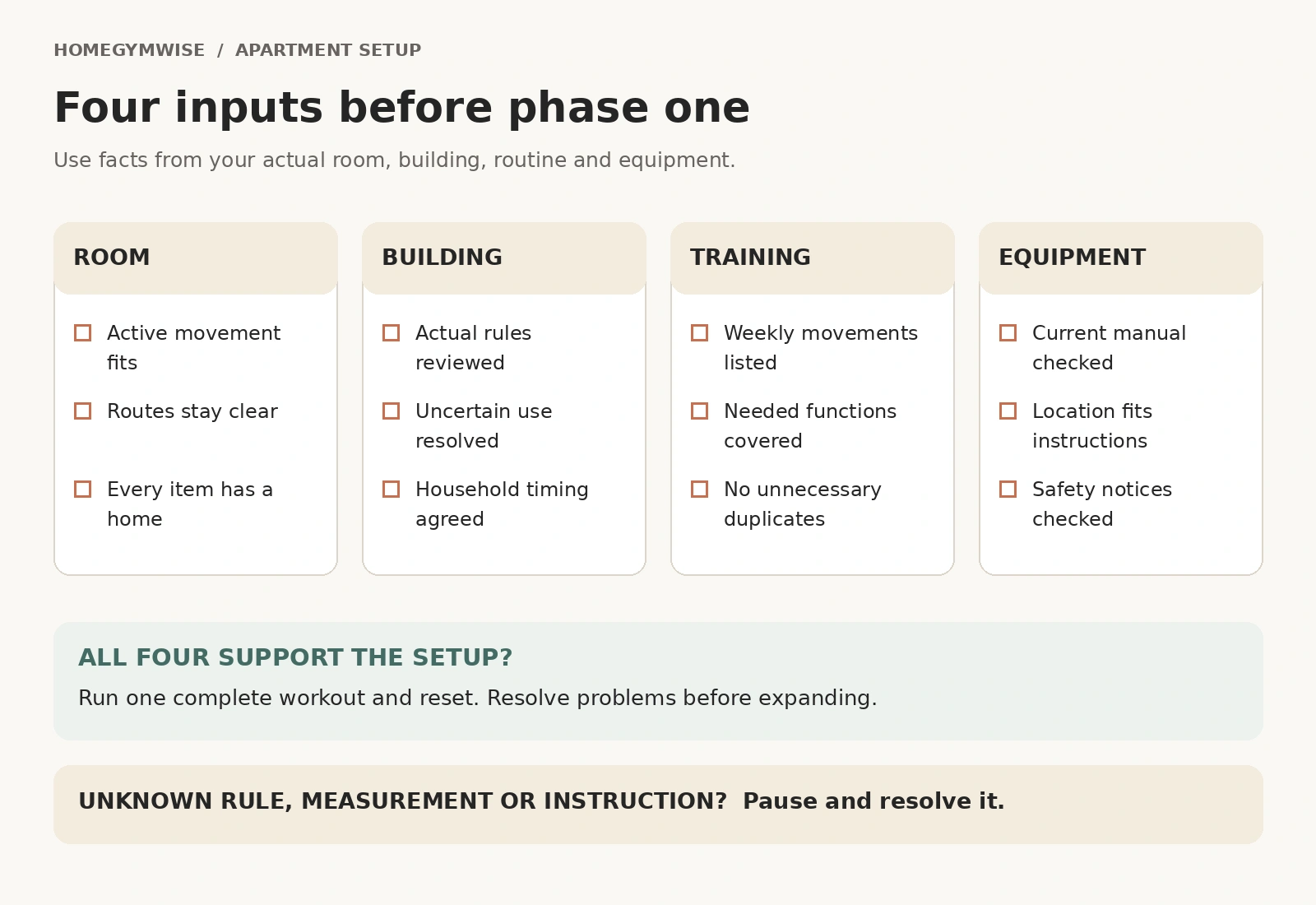
Use the checklist to record what is known, not to turn an unknown into a checkmark.
Room
- I checked space in use, in storage, and during setup.
- Doors, fixtures and normal access remain usable.
- Each item has a workable storage home.
Building and household
- I reviewed the actual rules and resolved relevant permission questions.
- The delivery route and assembly plan work for the proposed item.
- Workout timing and shared-room use are agreed where needed.
Routine
- The first setup supports the session I intend to repeat.
- Extra equipment fills a missing function rather than duplicating one.
- I know what I will observe during the session and reset.
Equipment
- I checked the actual model’s current instructions and relevant safety notices.
- Placement, surface, power and storage requirements are resolved.
- I have not assumed that compact size or a mat proves suitability.
Start with the items whose checks are complete. Keep an unresolved item off the purchase list until you can replace the missing assumption with a measurement, instruction or property-specific answer.



8 Comments