Treadmill Outlet Planning for Small Rooms and Apartments
Choose a treadmill position only after checking both its exact power-connection requirements and the room arrangement. An outlet within reach is not proof that the electrical installation meets the equipment’s requirements.
Collect the model documentation and give unresolved electrical questions to the manufacturer and a qualified electrician. This is a documentation and placement checklist, not wiring instructions or a universal circuit specification.
Collect the requirements for your exact model and market
Record the full model and version, the market it was supplied for, and the matching manual. Identify the documented supply, grounding, circuit and connection requirements. Keep the source page or manual section with each entry so an electrician can check the original wording.
Do not transfer ratings from another treadmill or from an overseas version. Product listings, labels and manuals that appear inconsistent need clarification before use rather than a convenient assumption.
For the wider room plan, use the apartment home gym setup checklist. An electrical check is one part of that plan, not a substitute for operating clearance, access or other equipment requirements.
Separate an outlet location from a verified installation
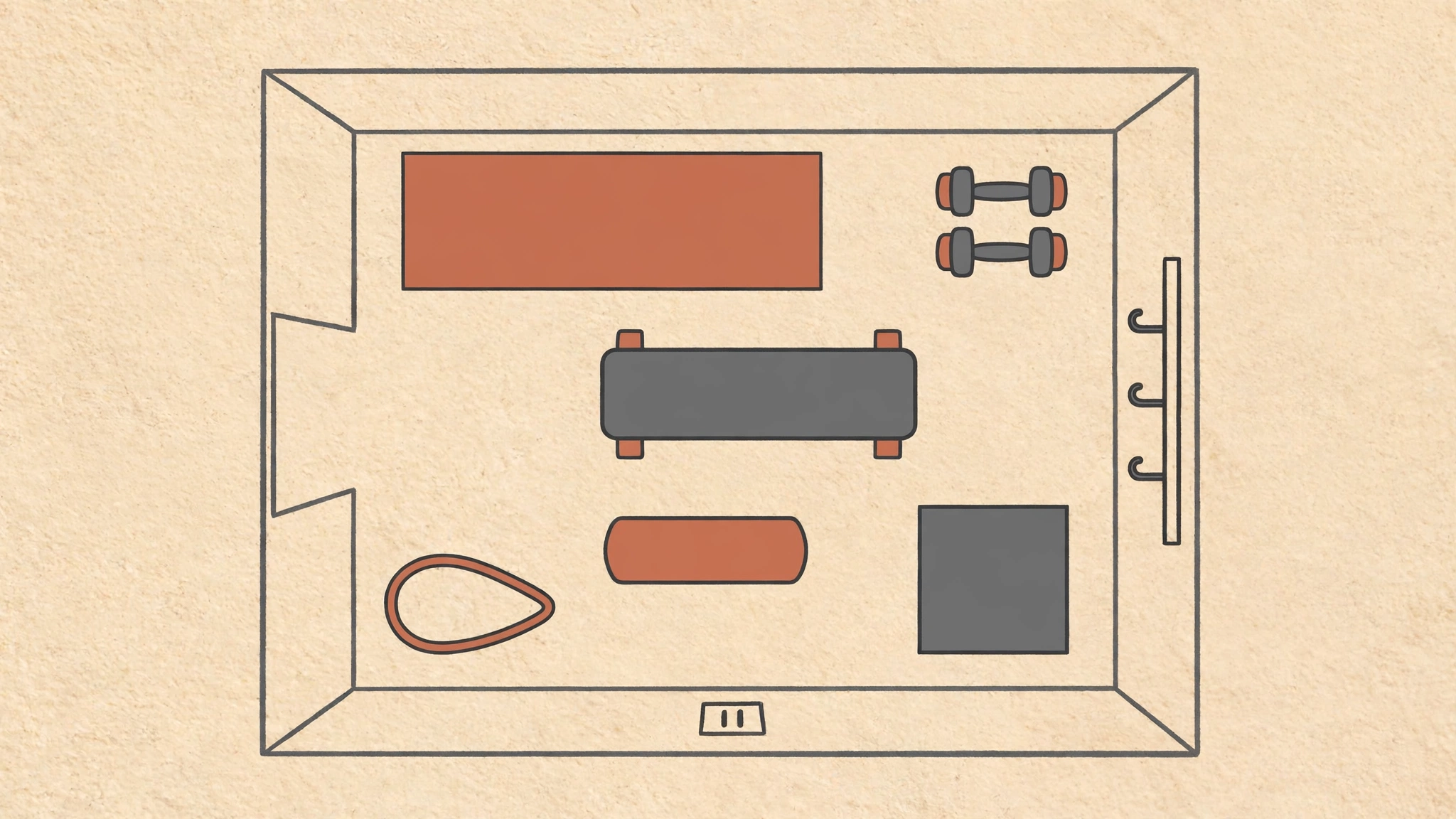
List the candidate outlet locations on your room sketch. Note the equipment’s proposed position and the connection path required by its documentation. Have the electrician determine whether the installation supports the exact requirements; do not rely on outlet appearance or proximity alone.
| Item | Source of the answer |
|---|---|
| Equipment connection requirements | Matching manufacturer documentation |
| Whether the installation meets them | Qualified electrician’s assessment |
| Permitted connection accessories, if any | Exact manufacturer instructions, checked with the electrician where necessary |
| Required changes or permissions | Electrician and property manager, as applicable |
For example, Horizon directs users to a grounded direct connection without extension cords or surge protectors and refers electrical questions to an electrician. Treat that as the manufacturer’s scoped guidance, not permission to apply one brand’s circuit requirements to every treadmill.

Make the cord route part of the room decision
Check the actual documented cord arrangement from the proposed equipment position. Include the desk, furniture, access area and any permitted equipment movement in the sketch. Identify where a route would require stretching, trapping, covering or improvising a connection, and have that conflict resolved before settling on the position.
Do not solve a reach problem by assuming that a longer cord, power strip or adapter is acceptable. Check the exact instructions. Where the permitted connection cannot be achieved, reconsider the location or obtain an appropriate professionally installed solution.
Keep the connection plan distinct from a floor-protection or storage plan. Moving a treadmill for storage can change the arrangement; its manufacturer instructions still govern disconnection, movement and reconnection.
Escalate protection conflicts instead of bypassing them
If a manufacturer instruction appears to conflict with required electrical protection or the existing installation, stop and ask the manufacturer and electrician to resolve it. Do not remove a protective device, alter a plug or choose a different outlet simply to avoid a recurring trip.
CPSC’s cord-safety guidance warns against removing a grounding prong. That is not an endorsement of using an extension cord with a treadmill; the equipment’s connection restrictions still apply.
In an apartment, obtain the applicable property approval for proposed installation changes. Keep the resulting written instructions with the equipment record. This guide does not establish local electrical-code compliance or authorize DIY changes.
Complete a placement decision record
| Record | Leave unresolved until |
|---|---|
| Model, market and matching manual | Identity and documentation agree |
| Required connection and circuit information | Missing or conflicting instructions are clarified |
| Installation assessment | The qualified electrician confirms the applicable requirements |
| Cord path and operating position | The documented arrangement works without improvisation |
| Any proposed changes | Professional work and applicable property approvals are arranged |
Keep unknown entries as unknown. A useful outcome may be a different equipment position or a decision to postpone installation. The completed record should explain why the chosen position works with the exact documented requirements, rather than merely showing where the nearest outlet is.