
Home Gym Storage Ideas for Small Spaces: A Practical Organization Plan
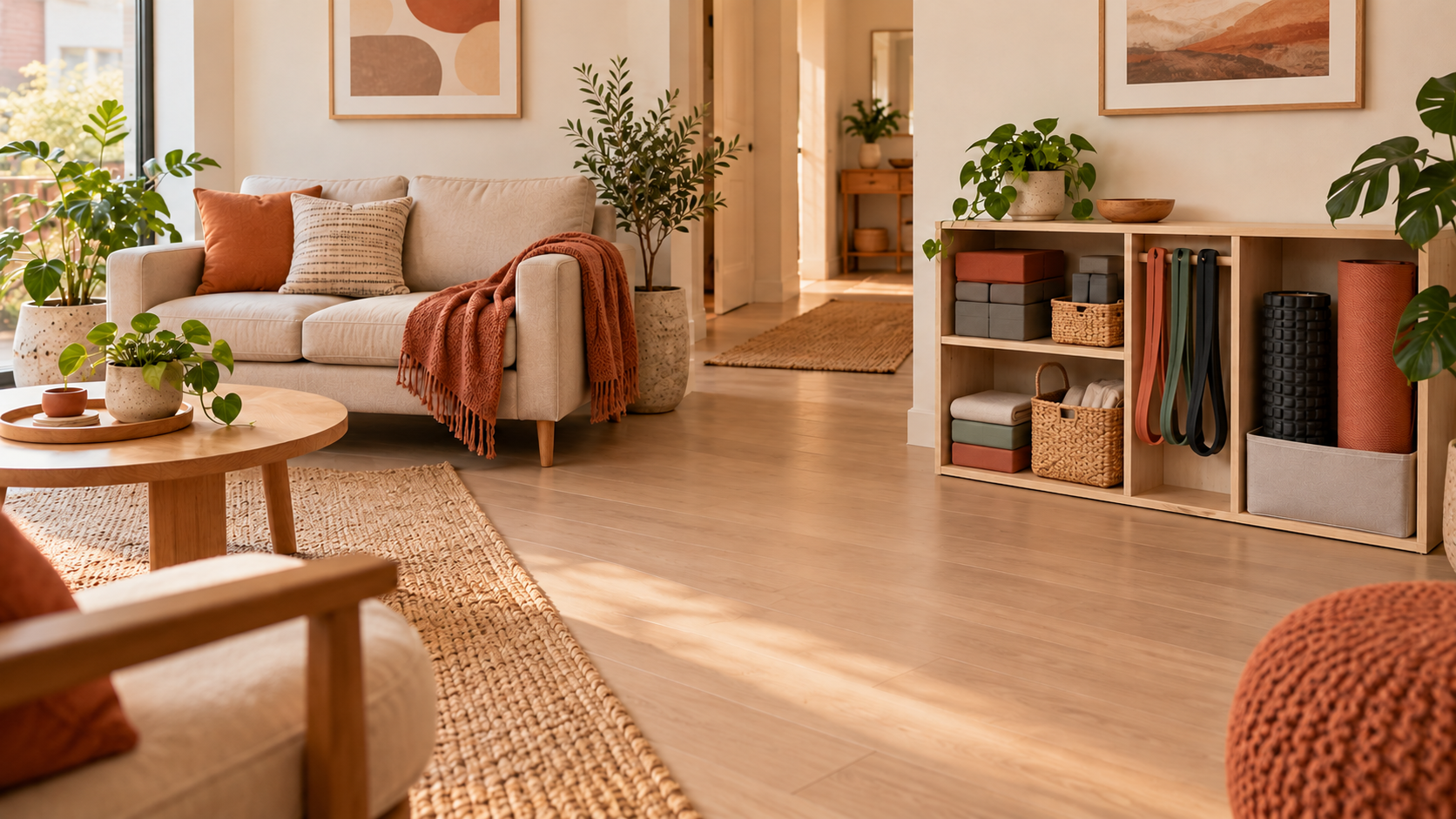
Good home gym storage lets you get the equipment out, use it, and put it away without taking over the room. Start with the gear you own: its stored shape, its support requirements, and the space you need to retrieve it. Then choose organizers around those needs.
In a shared living room, bedroom, or office, the best-looking hiding place is not always the most useful one. A tidy visible bin may work better than a container trapped behind furniture. Use the plan below to give each item a suitable home and find the storage step that keeps causing clutter.
Inventory the gear and measure retrieval space
Before buying an organizer, gather your workout gear and make a short inventory. For each item, note:
- Stored shape: include handles, straps and projections, following the equipment’s approved storage position.
- Frequency: every session, occasionally, or rarely.
- Handling: whether you carry, roll, fold or otherwise move it according to its instructions.
- Support and care: any relevant load, positioning, cleaning or drying requirements.
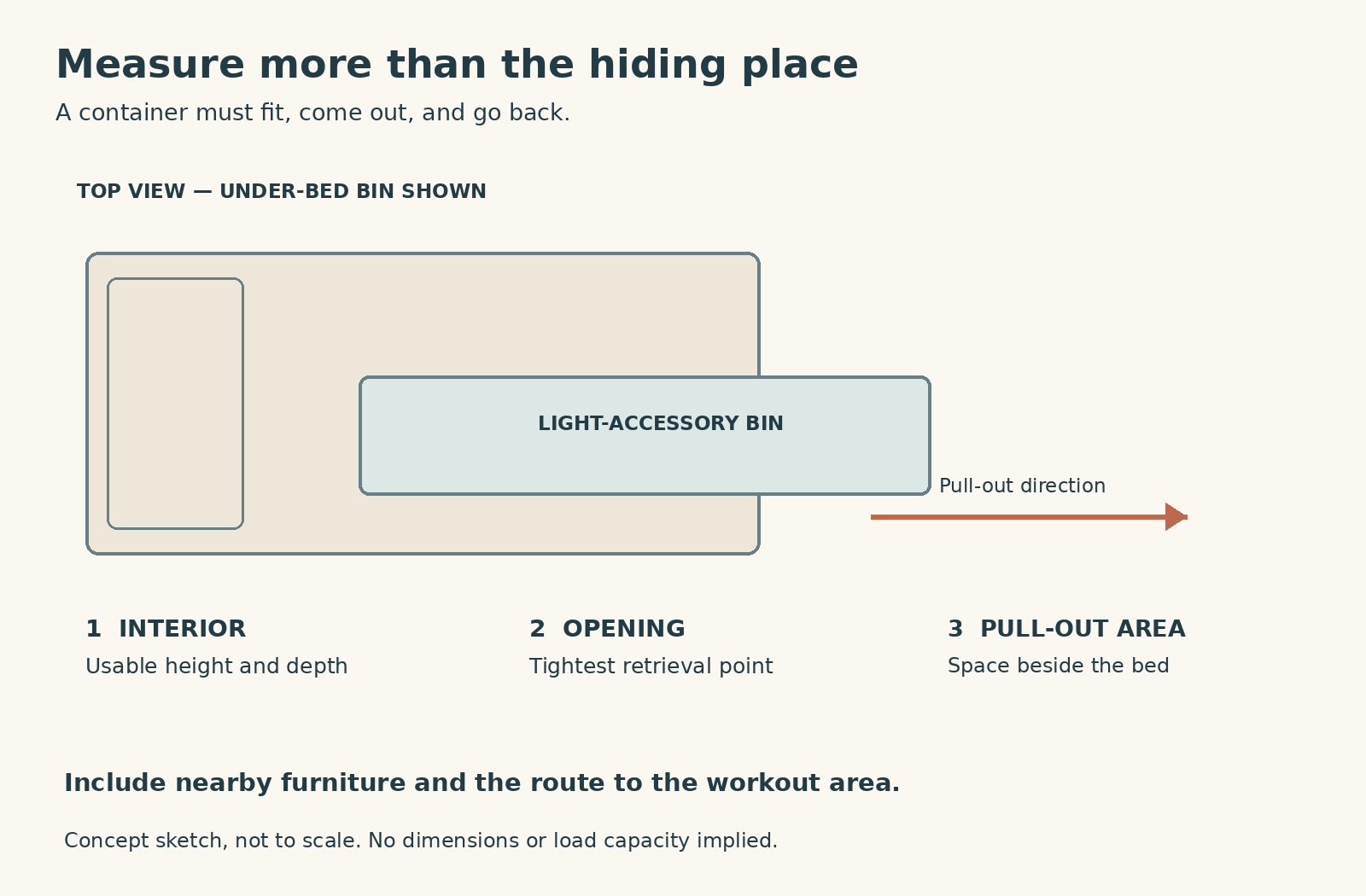
Measure the storage location in three parts: the usable interior, the opening, and the space needed to retrieve and return the item. Record the tightest point rather than relying on the organizer’s outside dimensions.
A shallow bin might fit under a bed but fail at the nightstand beside it: there may be no room to pull the bin out. A cabinet can have enough interior space while its open door blocks the route to the workout area. Check the whole movement, not just the final parked position.
Choose one main equipment parking spot to begin with. Add another when it solves a real handling problem—for example, a separate mat position instead of forcing a tall rolled mat into a crowded accessory bin.
Match the storage to the equipment
Sort by storage need rather than trying to put everything in the same container.
| Equipment group | Storage approach to consider | Check before using it |
|---|---|---|
| Bands, straps and small accessories | Divided drawer, light-accessory bin or permitted hook | Items remain identifiable; straps stay contained |
| Mat, foam roller and yoga blocks | Compartment or container that fits their approved stored shapes | The opening works and taller items remain contained |
| Dumbbells and kettlebells | Low, equipment-appropriate support with a verified load limit | Intended use, capacity and retrieval arrangement suit the actual gear |
| Folding bench or bulky equipment | A designated parking position allowed by its instructions | Stored orientation, handling route and normal room access work |
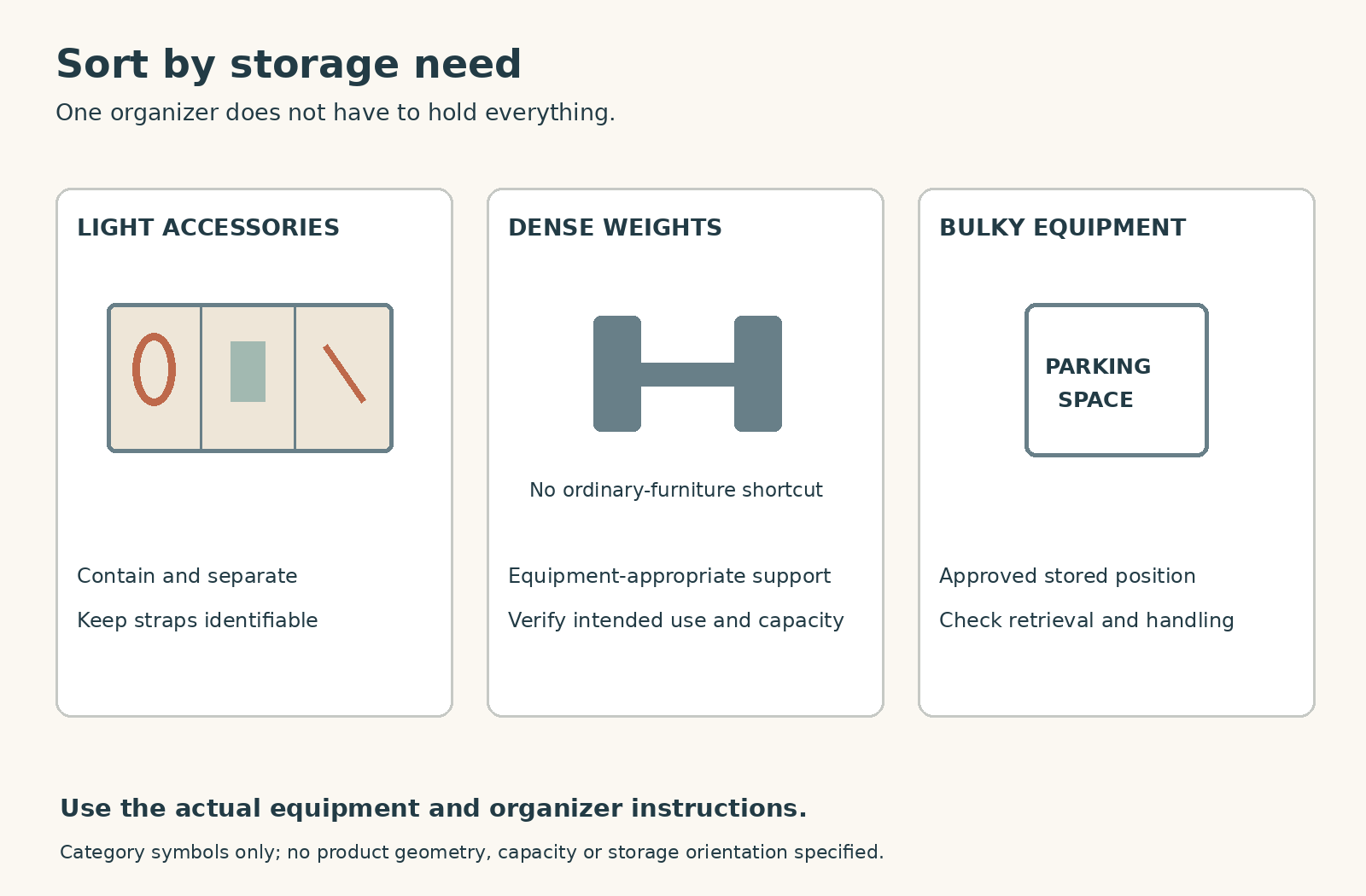
Do not turn a decorative shelf or ordinary cabinet into a weight rack simply because the equipment fits. Confirm the support’s intended use and capacity for the proposed arrangement. A storage ottoman’s seating rating, for example, does not establish the load permitted inside it.
For light accessories, start with existing suitable storage. A divider or a separate compartment may solve a tangled-band problem without another piece of furniture. Keep dense or bulky gear separate when grouping it makes retrieval awkward.
Give the room parking, workout, and keep-clear zones
Think of the room as three jobs rather than a single storage corner. These are planning labels, not prescribed dimensions.
Parking: where equipment lives between sessions. Give regularly used items a defined home so returning them does not require a fresh decision each time.
Workout: the area you clear for your actual activity. Account for movement, equipment access and instructed handling; a mat outline alone does not describe the whole activity.
Keep clear: the room’s ordinary access space. Check door swings, furniture access and the route people use through the room. Keep this from becoming an overflow equipment pile.
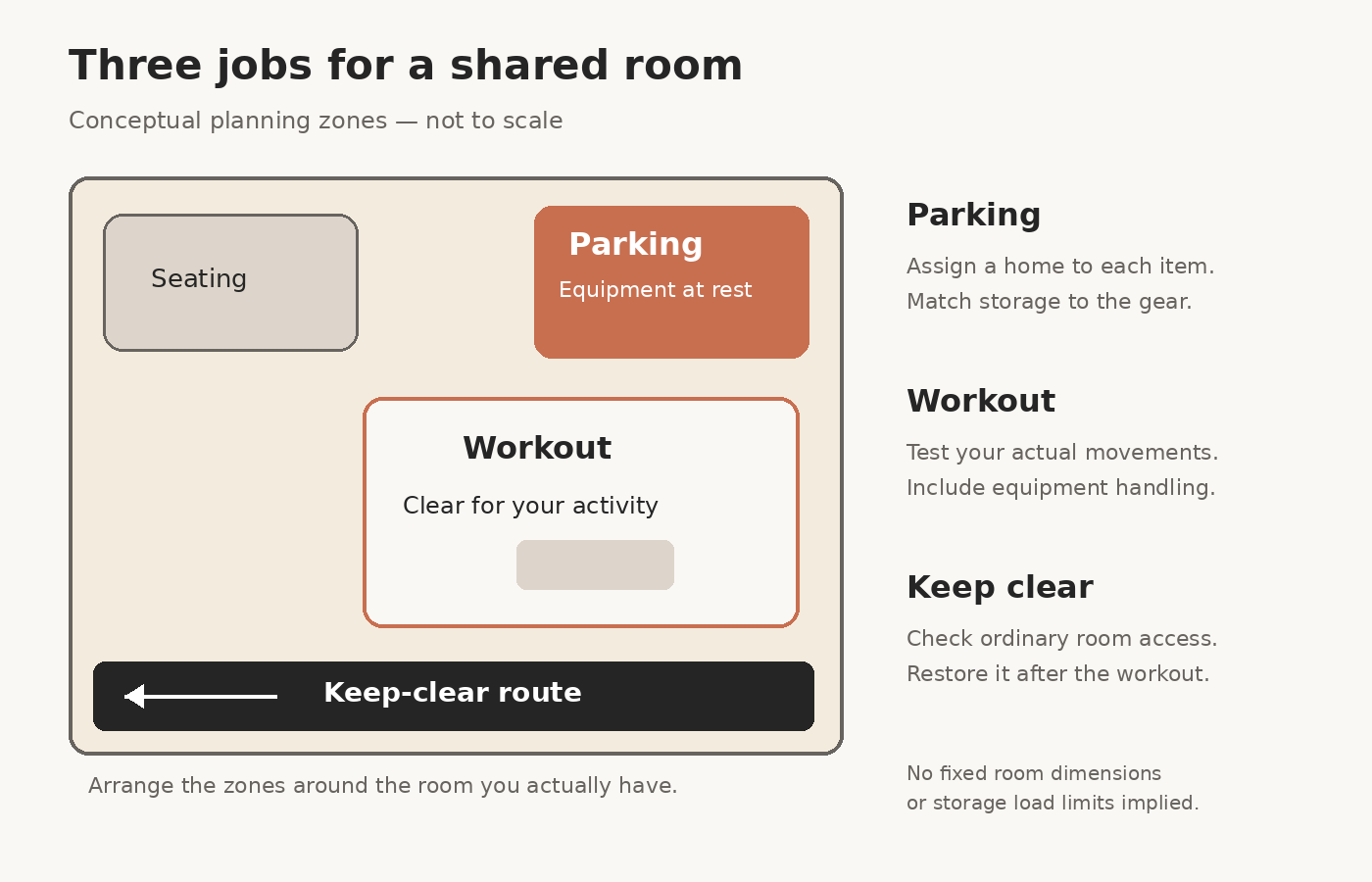
For example, a shared room might use a cabinet compartment for bands and blocks, a suitable support for weights near their use area, and a separate approved mat position. Everything does not need one container. It needs a workable path from storage to use and back.
If the conflict involves the whole room’s usable shape, small home gym floor plans cover the measured layout decision in more detail. This storage plan focuses on where the equipment rests and how you reach it.
Choose wall storage or a freestanding option deliberately
Wall storage can make light accessories visible and easy to sort. It also introduces fixture, surface and installation requirements. Before choosing a hook, rail or wall organizer, establish:
- The actual fixture permits the intended item and load.
- The wall or mounting surface meets its requirements.
- The installation is allowed in the property.
- You can follow the applicable installation instructions.
If one of these is unresolved, use another suitable storage option while you obtain the answer. Do not substitute an adhesive hook for a load-bearing fixture by assumption; its stated limits and surface requirements still apply.
A drawer, cabinet compartment or freestanding organizer may avoid that particular wall fixture. Freestanding furniture can still have anchoring requirements. CPSC’s Anchor It guidance advises securing top-heavy furniture and following the manufacturer’s instructions. CPSC also recommends keeping heavier items on lower shelves; that advice does not establish a shelf’s capacity for weights.
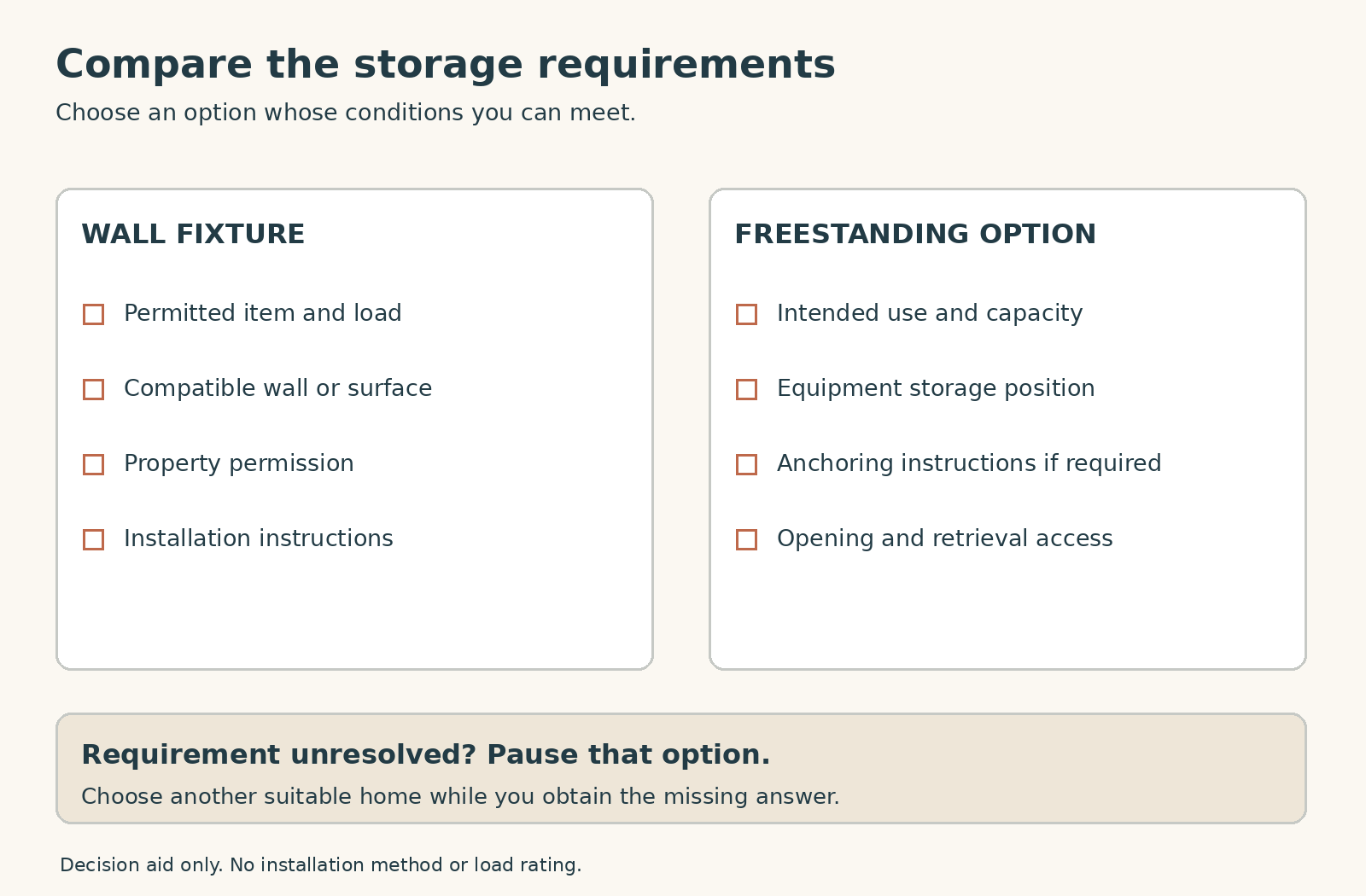
Choose the option whose requirements you can actually meet. Leaving an installation requirement unresolved is not a storage solution, and a more discreet location does not make unsuitable support acceptable.
Compare hidden storage by how you will retrieve it
Hidden storage helps a shared room return to everyday use. Choose it by the access tradeoff you can live with.
Under the bed: useful for light items in a container that fits the available height and opening. Check the pull-out area beside the bed. An awkward reach for heavy gear is a reason to choose another location, not a challenge to work around.
In a closet: group small accessories in an accessible bin or drawer. Put frequently used gear where you can reach it without unloading unrelated household storage. Leave room to return it.
In a closed cabinet: mixed light accessories can stay together and out of sight. Check interior depth, door clearance, support suitability and anchoring instructions. Avoid filling a compartment so tightly that every return becomes a packing task.
In a portable basket: light accessories can move together between their home and the workout area. Keep the purpose narrow; an ordinary basket is not an improvised carrier for heavy weights. A visible basket beside the use area can be more practical than hidden storage across the room.
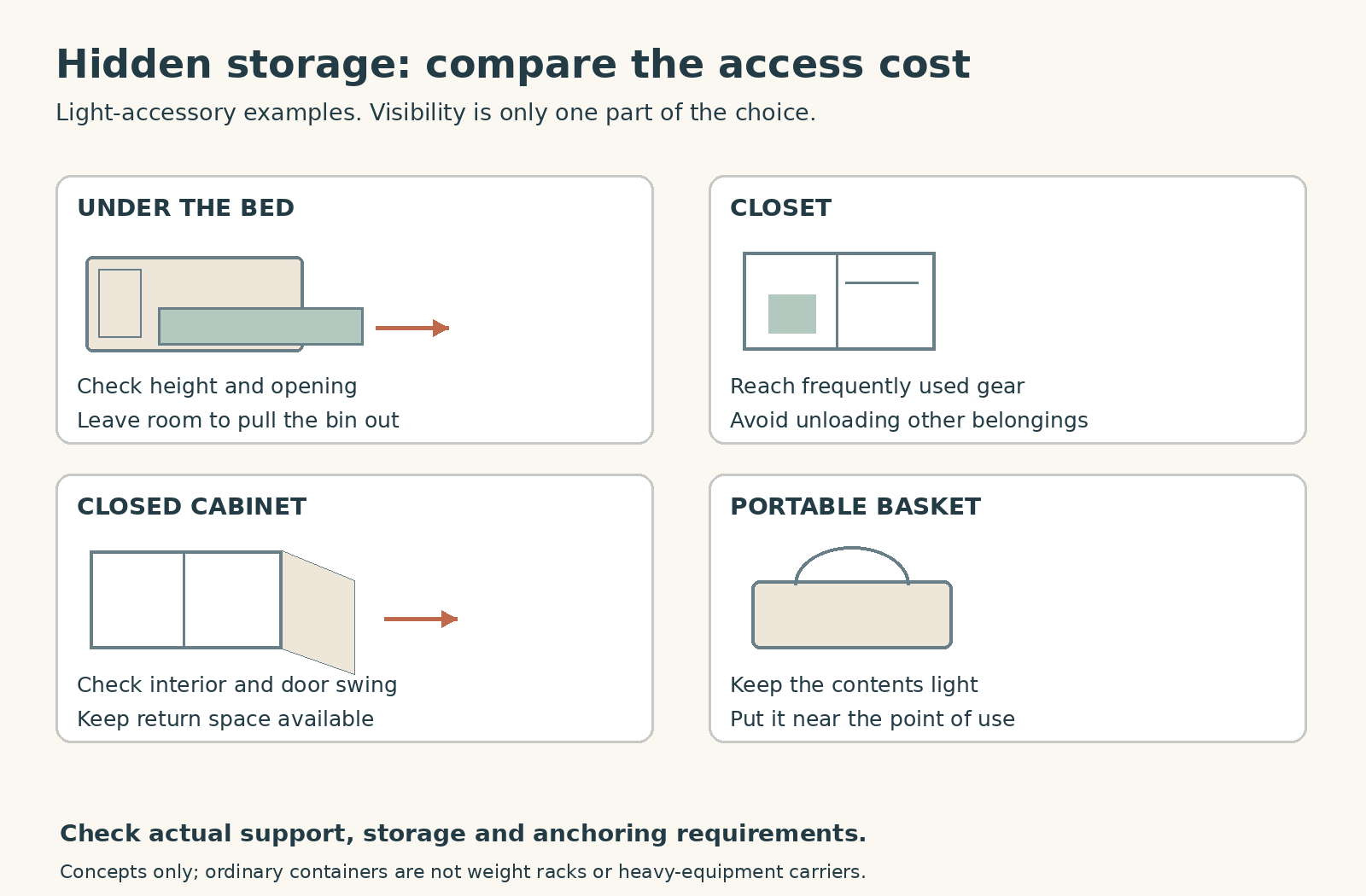
Try the proposed arrangement with the actual items before buying more containers. Follow their storage and care instructions; concealment is useful only if the equipment remains suitable to store there and easy to retrieve.
Test the setup and reset
Once you have a provisional arrangement and its requirements are resolved, observe a normal routine:
- Set up the room for a workout you already do.
- Retrieve each item in the order you need it, using its instructed handling method.
- Make the usual equipment changes without leaving unused gear in the walking route.
- Return everything to its assigned home.
- Check that doors, seating and normal room access work again.
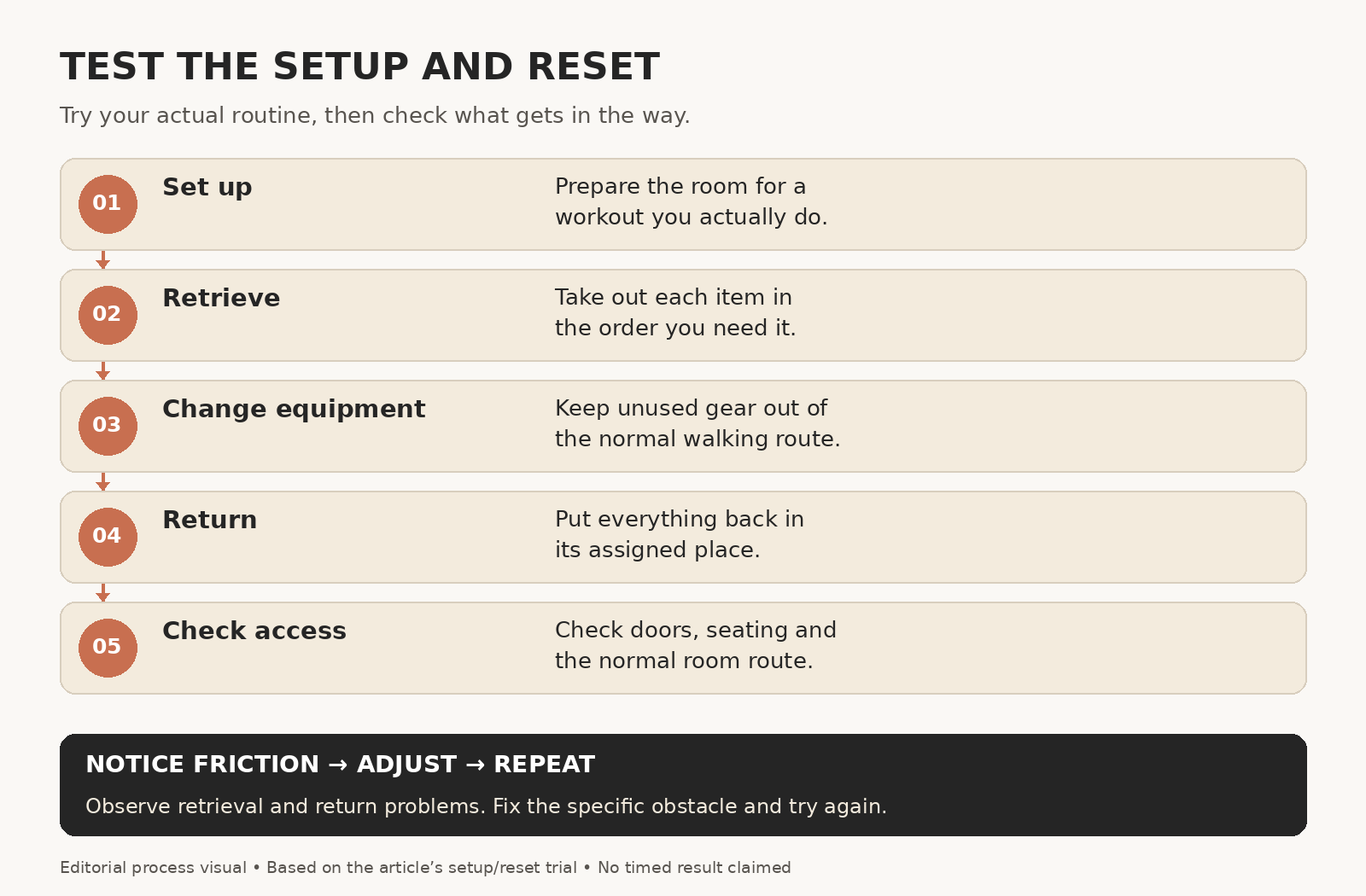
Notice where the arrangement breaks down. Did a container need emptying to reach one band? Did the mat have to squeeze behind other belongings? Did a bulky item stay out because its parking space was inconvenient?
Change that specific obstacle and repeat the observation. Move a frequently used accessory forward, separate tangled items, or choose a different approved parking location. This is a check of your own routine, not a timed test or a claim about equipment performance.
Follow equipment care instructions before returning items that need cleaning or drying. Do not solve the reset by putting them away in a condition their instructions do not permit.
Fix the storage problem that keeps returning
When equipment repeatedly ends up on the floor, watch the return step before shopping for another organizer.
- One item is always left out: check its opening, position and handling route. It may need a different home.
- Small accessories tangle: divide the container or narrow what belongs in it.
- A bin is constantly overflowing: separate regularly used items from occasional ones; check whether unrelated belongings have taken their space.
- The room never returns to normal: the parking locations or equipment selection may conflict with everyday use. More containers may make that worse.
Keep the arrangement that makes the next session and the return straightforward. You can reuse an existing suitable drawer or basket; buying storage is useful when it removes an observed obstacle.
If you are still deciding which equipment to add, the small apartment home gym setup checklist covers broader purchase readiness. For storage, finish with one concrete answer for each item: where it belongs, how you retrieve it, and how it goes back.


9 Comments