Adjustable vs Fixed Dumbbells for a Small Home Gym
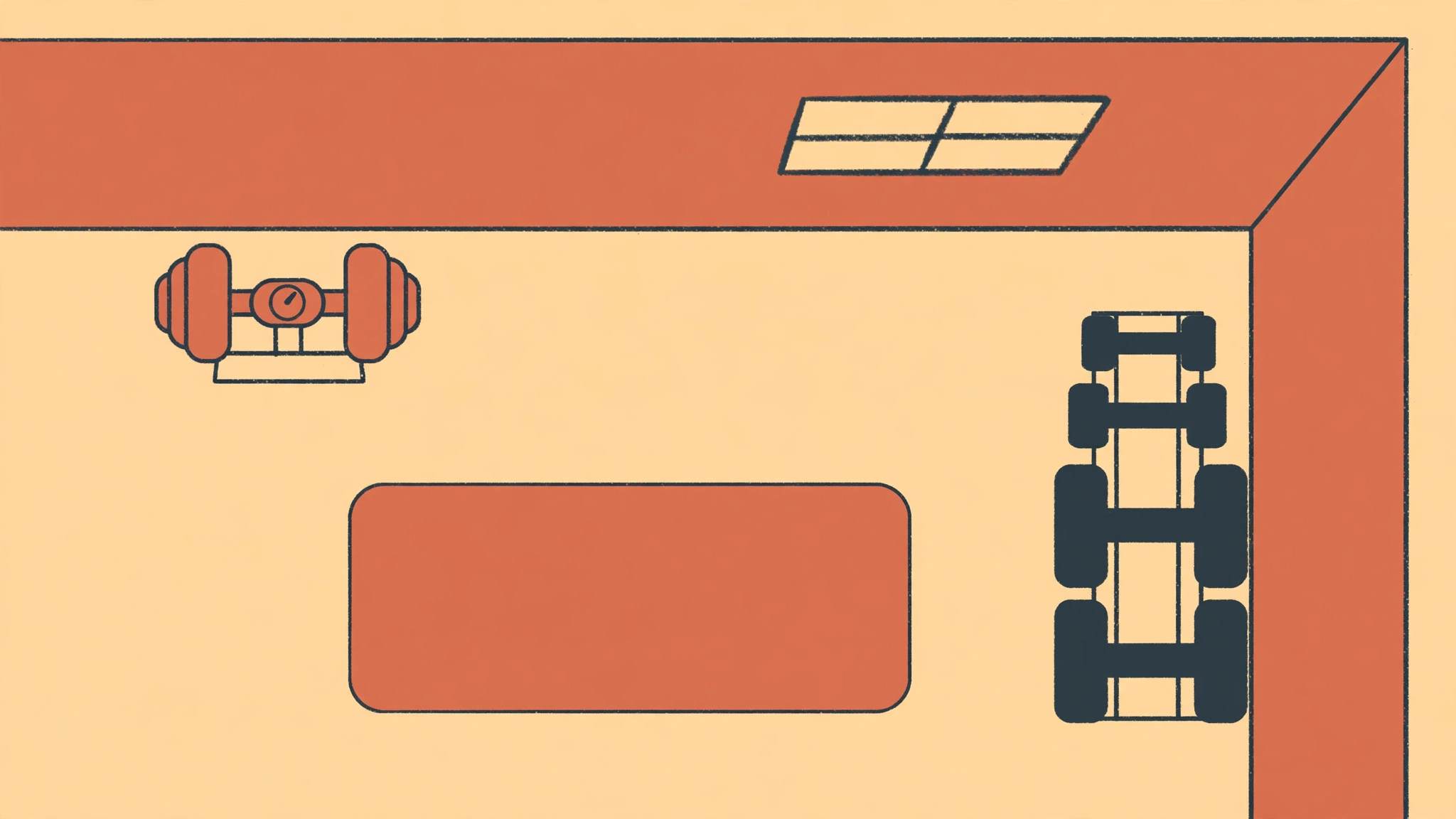
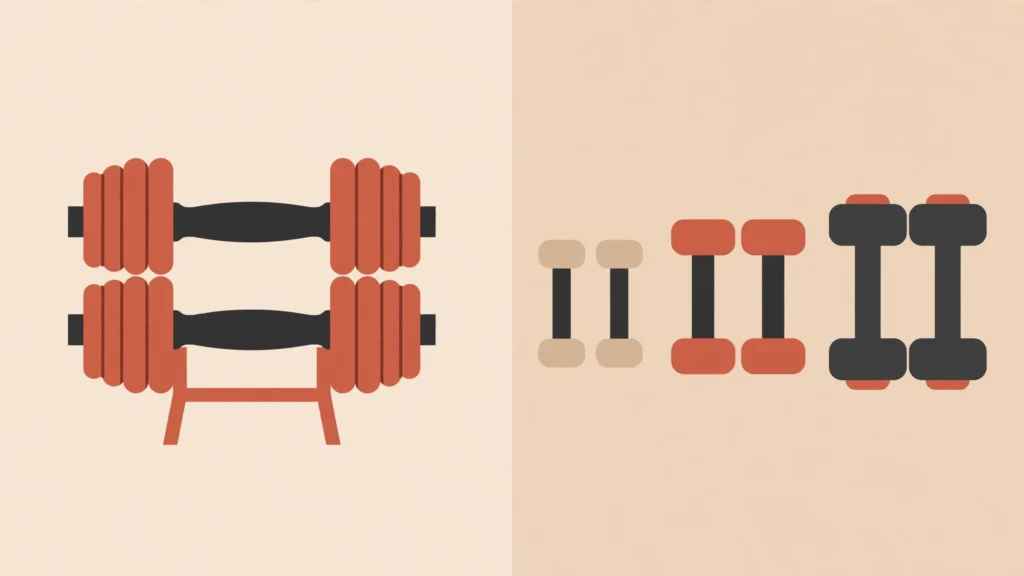
Adjustable dumbbells can consolidate several weight settings into one pair. Fixed dumbbells keep each weight available as a separate pair. For a small home gym, compare the settings you actually need, the complete storage arrangement and how you change weights during a session.
One adjustable pair versus an unspecified full rack is rarely a useful comparison. If you need only a few fixed pairs, compare those pairs. If you need a wider selection, include that whole selection on both sides of the decision.
List the weights you actually need
Write down the weight choices required by the routine you already intend to follow. Record the smallest and largest settings and any intermediate choices that matter. This is an equipment inventory, not a recommendation for which weights or exercises you should use.
For an adjustable candidate, check the actual settings and increments. A maximum weight alone does not show whether the intermediate choices match your list. Identify whether changing increments requires additional parts and whether those parts are included.
For fixed dumbbells, translate the same list into the individual pairs you would need. Include existing usable pairs rather than pricing and storing a replacement set automatically. If another household member needs different weights, add those requirements explicitly.
The usable-space planning guide helps define the room available for the resulting arrangement. Keep brand-versus-brand comparisons separate from this format decision.
Compare complete storage arrangements
Count what stays in the room, not only what is in your hands. An adjustable system may involve a base, stand, loose plates, collars or expansion parts, depending on its design. Fixed pairs need actual return locations and room to retrieve the pair you want.
| Include in the comparison | Adjustable format | Fixed format |
|---|---|---|
| Weight choices | Settings that genuinely cover your list | The specific pairs that cover the same list |
| Stored equipment | Dumbbells plus required bases, plates and accessories | Every selected pair plus the chosen storage arrangement |
| Access | Room to retrieve and adjust as instructed | Room to retrieve and return each pair |
| Later additions | Compatible expansion, if supported | Additional pairs and their return locations |
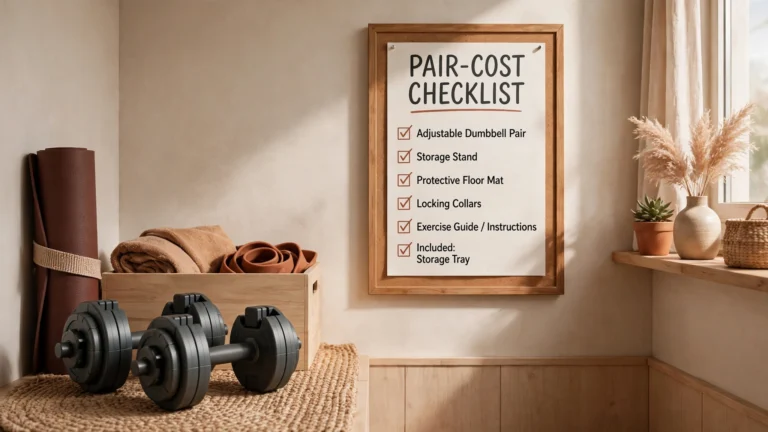
Do not count a stand twice if it is already included, or omit it because a photograph shows only the handles. Compare actual dimensions for the configurations you would own. No universal percentage saving follows from the format name.
Use a broader equipment storage plan to organize the room. This comparison does not establish the capacity or suitability of a shelf, rack or floor.
Compare changing a setting with changing a pair
With fixed dumbbells, moving to another weight means putting the current pair away and retrieving another pair you own. With adjustable dumbbells, it means completing that system’s adjustment process. The convenience depends on the actual mechanism and where the equipment lives.
Selector-based and plate-loaded systems should not be treated as one identical workflow. A selector may change which weights remain with a handle; a plate-loaded design involves its documented plate and securing process. Follow the exact instructions rather than assuming all adjustments happen in a tray or take the same time.
For example, PowerBlock describes a nested-plate selector system and distinguishes compatibility between its series. That is evidence for its mechanism and the need to check parts, not a promise that every adjustable dumbbell operates that way.
Compare an ordinary change in the place you intend to keep the equipment. Ask what must be returned, selected, secured and checked before the next use. A demonstration is more informative than a claim that one format changes in a universal number of seconds.
Check handling and shared-use constraints
Look at the exact handling restrictions for either format. Do not assume a fixed dumbbell may be dropped, or that every adjustable system has the same restrictions. Intended use, surface and manufacturer instructions govern the actual equipment.
If possible, check the candidate’s grip and shape in person. A format label does not establish how a specific handle or assembled weight will work for you. Keep comfort impressions separate from verified dimensions and instructions.
Sharing introduces another question: which weights must be available at the same time? Two people can use different fixed pairs concurrently if both required pairs are available. One adjustable pair cannot supply two complete pairs simultaneously. Two adjustable pairs may solve that availability problem, but they also change the cost and storage comparison.
Future expansion needs the same care. Confirm exact compatible parts rather than assuming another range or generation will fit. A promise that you can “add more later” is useful only when the supported route is clear.
Choose a format using an equivalent comparison
Consider two illustrative inventories. One person needs several settings but uses only one pair at a time and has limited return space. An adjustable format is worth investigating if its settings, handling and complete footprint meet those requirements. Another household needs only a few pairs, including two pairs in simultaneous use. Fixed pairs may be a practical shortlist if their actual storage and access fit.
These examples do not prescribe a routine or choose a product. They show why the number of settings and the number of users matter more than comparing one box with a photograph of an entire commercial rack.
Record the same decision inputs for both options: required weight choices, complete stored equipment, change workflow, simultaneous use and compatible future additions. Then compare the full current cost, including any necessary stand, plates or accessories. Choose the arrangement that meets that record without relying on unused weight choices or assumed space savings.