Foldable Bench vs Flat Bench: Compare Storage and Use
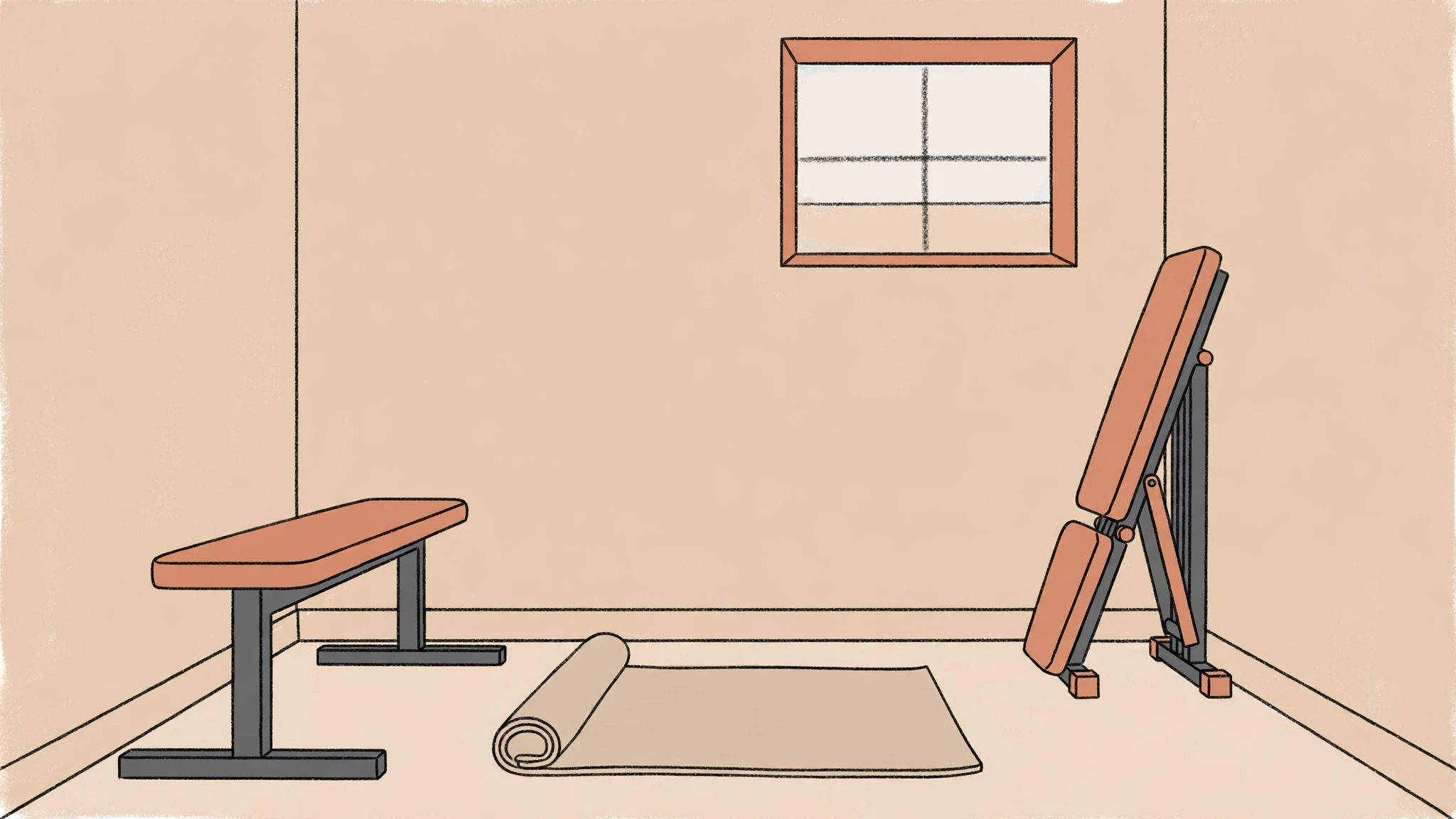
“Foldable” and “flat” answer different questions. Foldable describes how a bench changes for storage. Flat describes its working pad position. Start by deciding which pad functions you need, then compare the permitted storage arrangement and the effort required to return the bench to use.
A folding feature does not establish incline capability. A flat pad does not tell you whether the frame folds or whether the bench may be stored upright. Treating the labels as a simple either-or choice can hide the combination your room actually needs.
Separate folding from flat
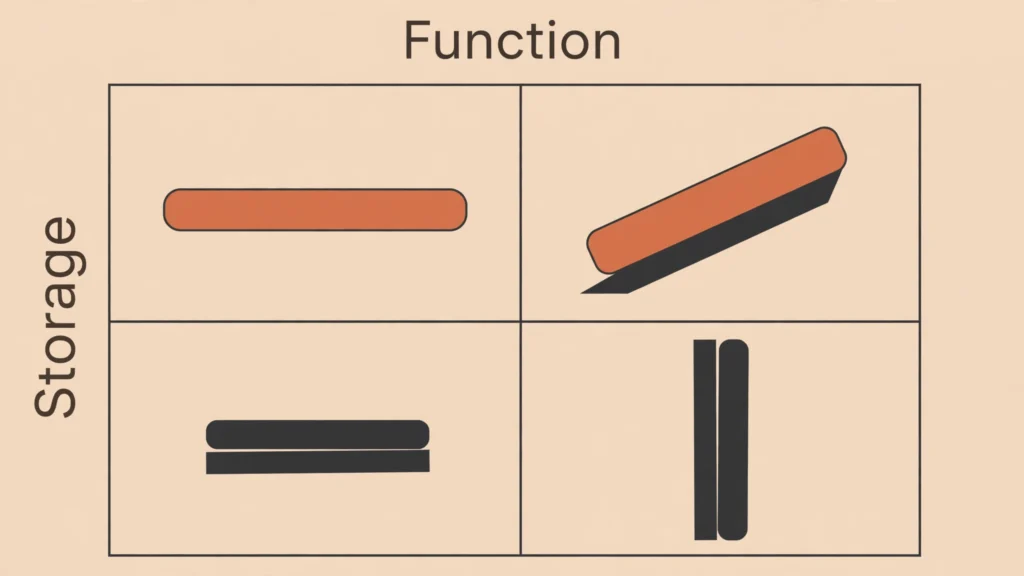
Use two headings on your comparison sheet: working function and storage design. Under function, record the supported pad positions. Under storage, record whether and how the bench folds, stands or otherwise changes configuration as authorized by its instructions.
REP’s flat-bench guide describes a flat bench as having a pad that does not adjust into incline or decline, while noting differences among flat benches in size, capacity and storage options. The important distinction is the pad function; the label does not supply the rest of the specification.
An adjustable bench may also have a flat operating position, which is different from being a fixed-pad flat bench. Read the actual configuration list. If a listing says only “foldable workout bench,” you still need to establish what the pad does during use.
Use the usable-space planning guide for the room itself. Keep this decision focused on bench function, storage and daily handling rather than choosing a complete gym layout.
Define the functions you need
List the pad positions required by the activities you already intend to do. Do not add incline or decline capability simply because an equipment list treats more adjustments as automatically better. Equally, do not choose a fixed flat pad when your existing requirements include a supported angle it cannot provide.
| Your requirement | What must be established |
|---|---|
| Flat-position use only | A suitable documented flat operating configuration |
| More than one pad angle | The exact supported positions and adjustment instructions |
| A particular attachment | Compatibility with the exact bench version and intended use |
| A load requirement | The applicable rating, its definition and the manufacturer’s restrictions |
Capacity and suitability need their own checks. Confirm what a rating includes rather than assuming the advertised number means the same thing across products. This guide supplies no universal load limit and does not infer stability from the number of adjustments, the weight of the frame or whether it folds.
Deciding function first can simplify the next step. You can reject a candidate that lacks a required position without debating its folded size, then compare storage among candidates that perform the needed role.
Compare working space and stored shape
Measure the complete proposed working arrangement using the equipment’s instructions. Include access and the space needed for the intended activity and other equipment. Pad length alone is not the room requirement.
For storage, obtain dimensions in the permitted stored configuration. Include height and any projecting parts, not just the reduced floor outline. Check the opening and route to the storage location. A folded bench fitting inside a closet is not enough if it cannot pass through the opening in an authorized transport state.
Do not assume that any bench can be balanced on its end, hung on a wall or pushed beneath furniture. Those are distinct storage arrangements with their own requirements. If a storage method depends on an accessory or attachment, verify that exact arrangement before counting the space as recovered.
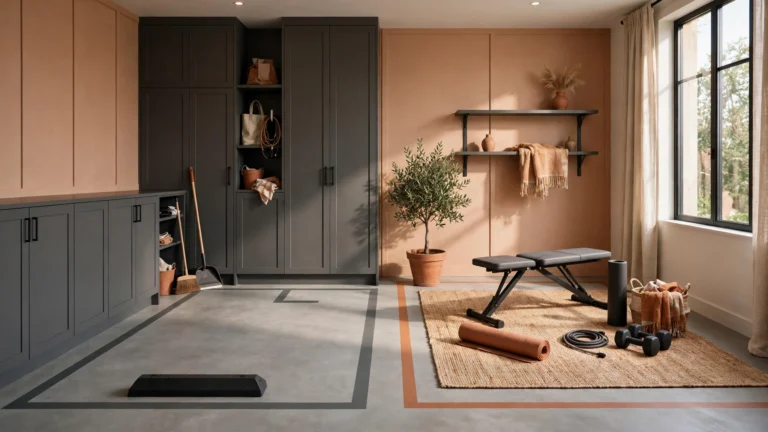
A dedicated workout corner may accommodate a bench in its normal working position. A room that returns to office use may need a permitted compact storage state. The better arrangement depends on the room’s use, not on a claim that folding always saves more useful space.
Account for each setup and return
Trace what happens before and after an ordinary session. For a folding candidate, record the manufacturer’s preparation, locking and inspection requirements. For a bench that remains assembled, record any movement or repositioning needed. Follow the actual instructions; a visual impression is not a setup check.
Ask for a demonstration when the transition is central to your decision. Check where the bench will be handled, which route stays open and whether the required process is practical for the person doing it. Do not infer easy handling from “portable,” or a universal setup time from “quick-fold.”
Also consider whether another person needs the room immediately afterward. A bench with an excellent stored shape can still be a poor choice if its return process is one you cannot complete as directed. Conversely, keeping a bench assembled can simplify the transition while committing more room to equipment between sessions.
Choose the combination that fits your room
Use the two decisions together rather than choosing from the label alone:
| Required function | Room constraint | Next candidate check |
|---|---|---|
| Flat-position use | Dedicated working location | Suitable operating fit and documented handling requirements |
| Flat-position use | Room must clear after use | A permitted storage arrangement and practical return sequence |
| Multiple pad positions | Dedicated working location | Supported adjustments and complete working area |
| Multiple pad positions | Room must clear after use | Both the required adjustments and a viable stored configuration |
These are categories for investigation, not recommendations for individual benches. Keep the exact candidate’s pad functions, operating arrangement, permitted storage state and recurring checks on one sheet. Leave unsupported capacity or storage answers unresolved, and compare complete costs only after the required combination is established.