Moving a Treadmill Through Doors and Stairs: Plan the Route First
Before arranging an upstairs treadmill move, collect the exact model documentation and map the entire delivery route. Ask the manufacturer and a qualified equipment mover to confirm the permitted transport configuration, handling plan and any disassembly before a date is booked.
This guide helps you prepare that assessment. It does not provide a DIY stair-carrying method, identify lifting points or certify that a floor or staircase can support the move.
Identify what will actually travel through the building
Record the model, version and whether this is a new delivery in packaging or relocation of an assembled machine. Obtain the relevant documented dimensions and weights for that state. Do not substitute carton dimensions for the assembled treadmill, or a folded storage size for an authorized transport configuration.
Ask the seller exactly where delivery ends. Curbside, building entrance and placement in the final room are different service scopes. Obtain written confirmation about stairs, assembly, packaging removal and any exclusions that matter to your route.
Use the home gym setup checklist for the wider room preparation. Keep this assessment focused on getting the equipment through the building.
Record every restriction along the route
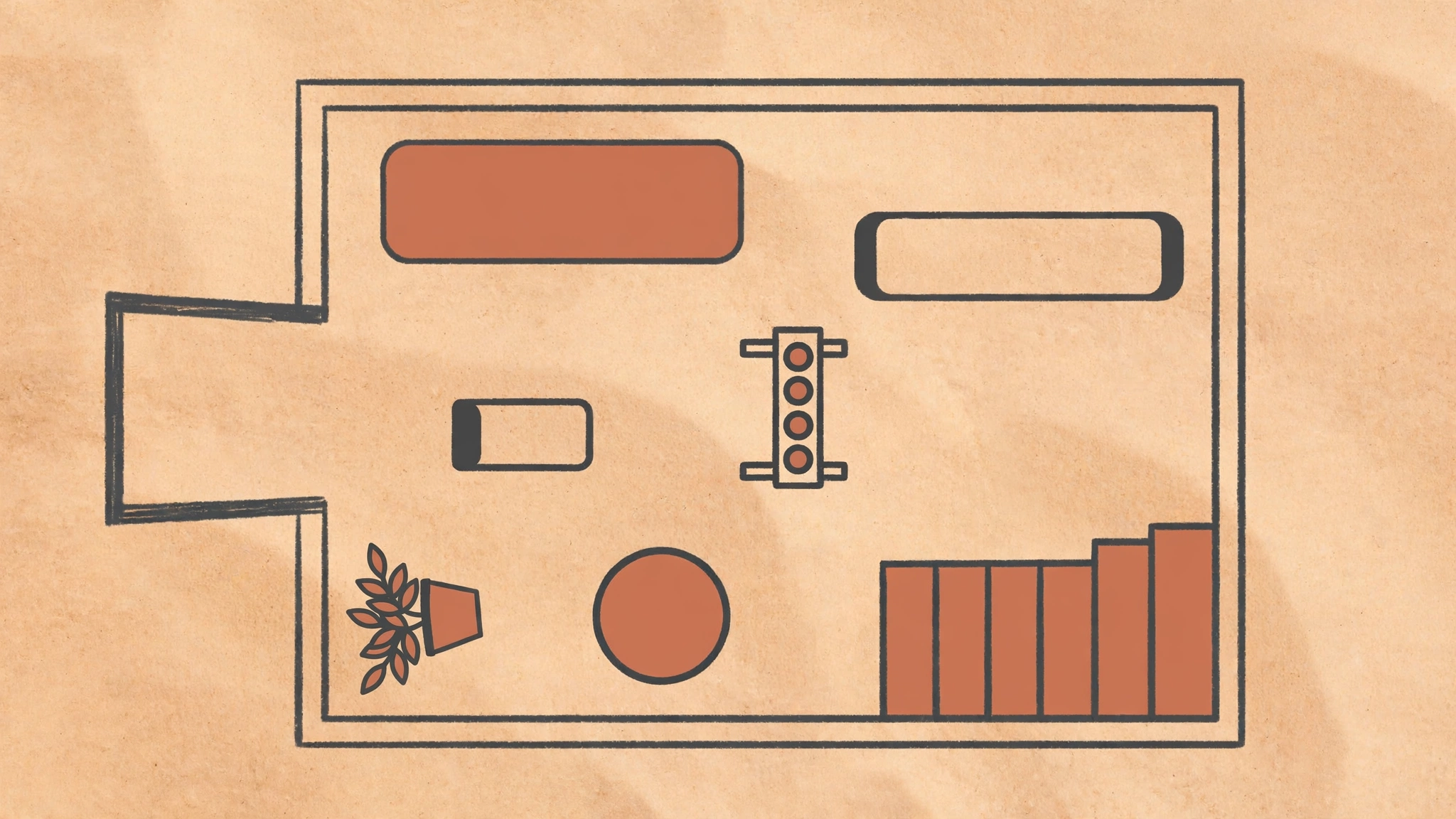
Start at the actual delivery or pickup point and work toward the final position. Document doors, corridors, stairs, landings and turns, including fixed obstructions and changes in height. Use photographs and a labelled sketch so a mover can identify the same locations you measured.
| Route segment | Information to give the assessor |
|---|---|
| Entrance and doors | Clear openings, fixed hardware and approach space |
| Hallways and turns | Available route geometry and obstructions |
| Stairs and landings | Stair layout, overhead restrictions and turning areas |
| Final doorway and room | Entry path and proposed final equipment position |
A machine dimension smaller than one doorway does not establish that it can negotiate the whole route. A turn, transport orientation or handling requirement may still prevent the move. Do not use a simple diagonal calculation as carrying approval.

Resolve disassembly through the exact documentation
Horizon separates its moving guidance by treadmill design and directs readers to the owner’s manual for applicable handrail assembly information. That supports checking the actual design rather than borrowing another treadmill’s procedure.
Ask the manufacturer what, if anything, may be removed for your move and who should perform that work. Request the applicable instructions and arrangements for reassembly and checks afterward. Leave a missing answer unresolved; do not turn an assembly diagram into an assumed reverse-disassembly method.
Also distinguish moving within a room from negotiating stairs. A documented wheel-moving method is not, by itself, authorization to roll or carry the treadmill on a staircase.
Ask the mover to assess the complete job
Send the documentation, route sketch and photographs before accepting a quote. Ask what survey is needed, what equipment and personnel the mover will provide, and how it handles an unsuitable route. The appropriate crew and method cannot be inferred from this guide or from the treadmill’s weight alone.
If there is a question about the building’s structural suitability, obtain an assessment from an appropriately qualified building professional. A mover’s route assessment and a structural assessment answer different questions.
In rented or shared buildings, confirm applicable access arrangements and permissions with the property manager. Record any required booking or protection arrangements rather than assuming the delivery service includes them.
Use a go, revise or stop record
| Check | Decision |
|---|---|
| Exact equipment state and transport documentation known | Continue the assessment |
| Route information incomplete or an obstruction unresolved | Revise the route information or plan |
| Disassembly or handling requires an unsupported assumption | Stop and ask the manufacturer or mover |
| Access permissions or professional assessments are outstanding | Keep the move unbooked until resolved |
Keep the written assessment and agreed scope with the booking. If the equipment, route or service changes, have the plan reviewed again. Once the machine is in its final room, use its operating and storage instructions; successful delivery does not establish correct setup for use.