Walking Pads for Small Spaces: Choose for Use, Storage and Moving
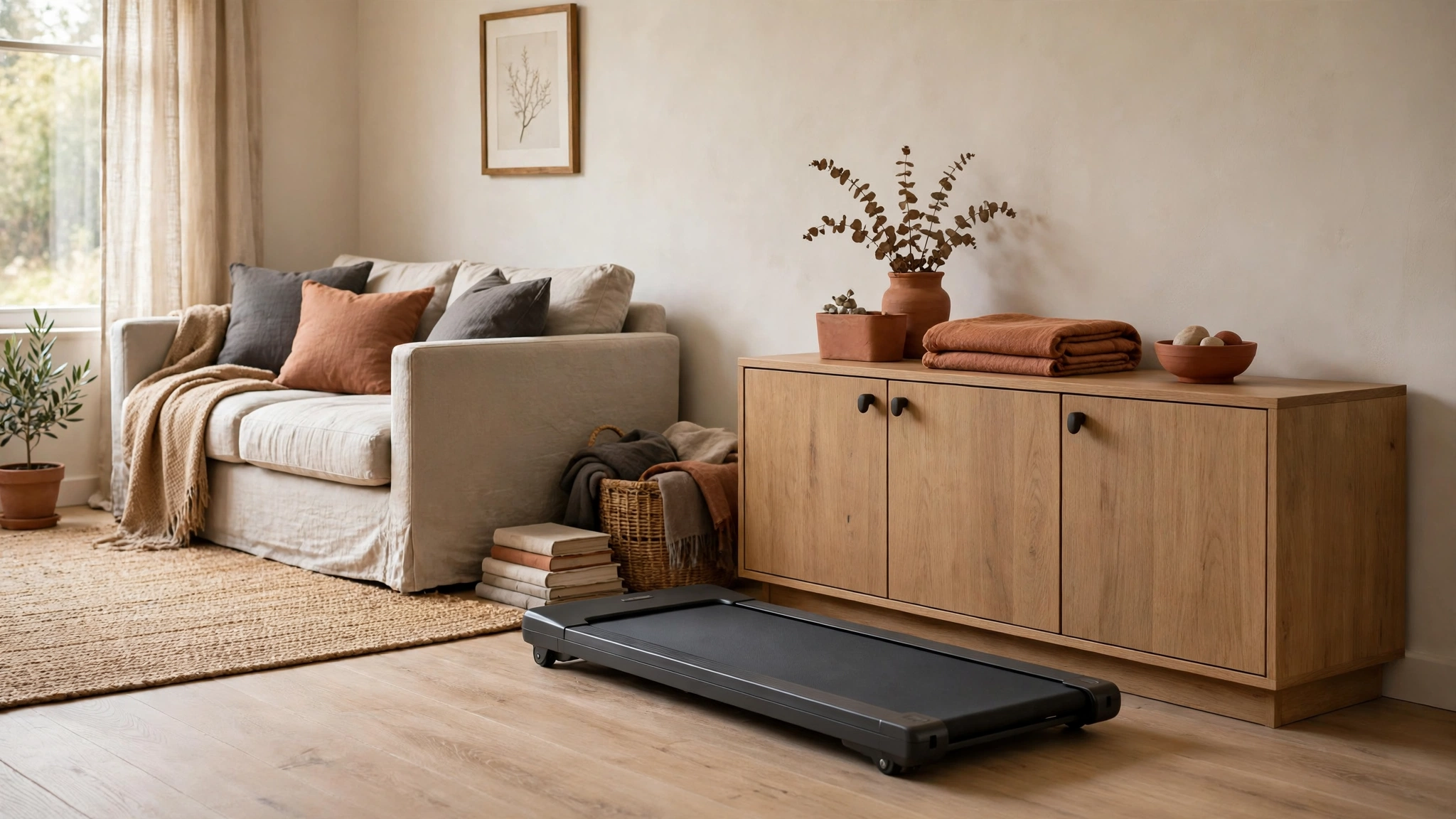
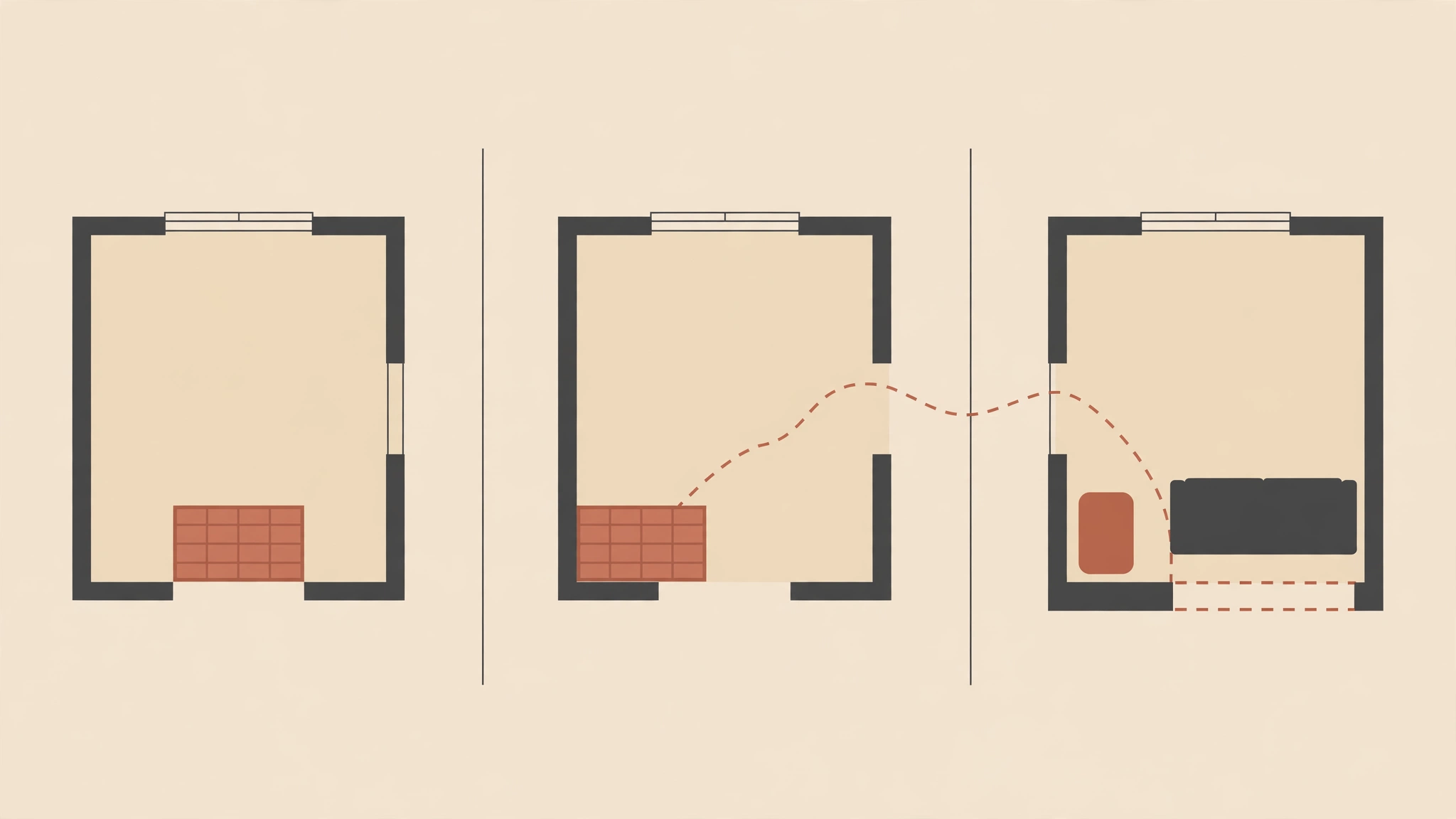
Choose a walking pad by checking three spaces: where you will walk, where the machine will stay when unused, and the route between them. A slim folded unit solves only the second problem. It still needs a workable desk position, the operating clearances in its instructions and a practical way to move it.
For a small apartment, begin with the room rather than a list of motor ratings. Eliminate machines that fail a necessary fit check before comparing their extra features.
Draw the walking space before the storage space
Mark the candidate’s open frame dimensions on a room sketch. Separately note the usable belt dimensions and the operating space required by its exact instructions. These are different measurements: a belt is not the frame, and the frame is not the full area needed during use.
Include doors, nearby furniture and the route other people use through the room. If the only placement leaves someone stepping around an operating machine to reach a doorway, look for another arrangement. A spare rectangle on a floor plan does not by itself establish a suitable location.
Keep manufacturer clearances intact. There is no single clearance figure in this guide that applies to every walking pad. Request the current manual before buying if the required space is absent from the listing.
A whole-room floor plan is useful at this stage. Decide what space remains available for ordinary living while the pad is open, rather than assuming every piece of furniture can move for each session.
Check desk height, belt fit and controls
An under-desk setup needs a standing work position that suits the user while standing on the machine. The deck raises the standing surface, so check the desk’s adjustment range against the candidate rather than copying your existing floor-standing setting.
Think about the work you plan to do. Reading a document and making detailed edits may have different practical demands. Treat working while walking as something to assess, not a promise that every task will remain comfortable or productive.
Ask how you start, stop and adjust the purchased model. Check where its controls can be kept within reach without blocking the workstation. A feature list is less useful if the control arrangement does not suit your desk.
The walking area also deserves its own check. A narrow frame is attractive in a small room, but it does not establish that the belt suits your stride. Where possible, try the category and check the seller’s return terms before committing to a tight fit.
A folding example: WalkingPad C2
The WalkingPad C2 US specifications provide a useful documented example. The page lists an open frame of 56.9 × 20.4 × 4.9 inches, a folded size of 32.5 × 20.4 × 5.4 inches, and a net weight of 55 lb. Its listed walking area is 47.2 × 15.7 inches.
The folding format may suit someone with a shorter parking space than the open machine would require. The tradeoff is that the open footprint still returns every time the unit is used, and the folded machine still has to travel to its parking spot.
Those figures are manufacturer specifications, not measurements from a HomeGymWise test. They are not operating clearances or proof that one person can comfortably lift the machine. Verify the exact revision supplied, including current dimensions and setup instructions.
Consider the C2 as a walking-only candidate with a folding deck and remote control. This guide does not recommend it for running or establish tested noise, health benefits, motor performance or upright storage permission.
Make the storage route part of the purchase
Measure the entrance to the storage space as well as its interior. A sofa can have a generous cavity behind a low front rail; the machine has to pass that rail first. Check the entire inward route, including legs and supports.
For example, imagine a furniture opening that is only 5 inches high. A candidate listed at 5.4 inches folded fails that opening check even if the space farther underneath is taller. This is an illustrative fit calculation, not a recommendation to force or tilt equipment into storage.
Wheels can help a machine roll, but they do not remove thresholds, turns or stairs. Decide who will move it, where they will stand and whether furniture must move first. Confirm permitted handling and storage orientation from the exact instructions; do not assume a folding deck can stand on its end.

Compare the full cost and decide
Build a short purchase worksheet before choosing a model.
| Decision | What to confirm |
|---|---|
| Open use | Frame, belt and required clearances fit together |
| Desk | Working height and reachable controls suit the setup |
| Parking | Opening, interior space and permitted orientation work |
| Moving | The actual route and handling routine are practical |
| Total cost | Delivery, required accessories and return freight are understood |
Check user capacity for the exact model as a separate eligibility filter. It does not approve the apartment floor or replace advice about a structural concern. Electrical setup also follows the supplied instructions; resolve an unclear requirement with the supplier or an appropriately qualified professional.
A lower advertised price is poor value if the desk must be replaced or returning an unsuitable machine is costly. Shortlist only the pads that pass the three-space check, then compare the current complete purchase cost and terms. That leaves you choosing between workable setups rather than attractive specifications.