Compact Rowing Machines: Compare Working Space and the Storage Method
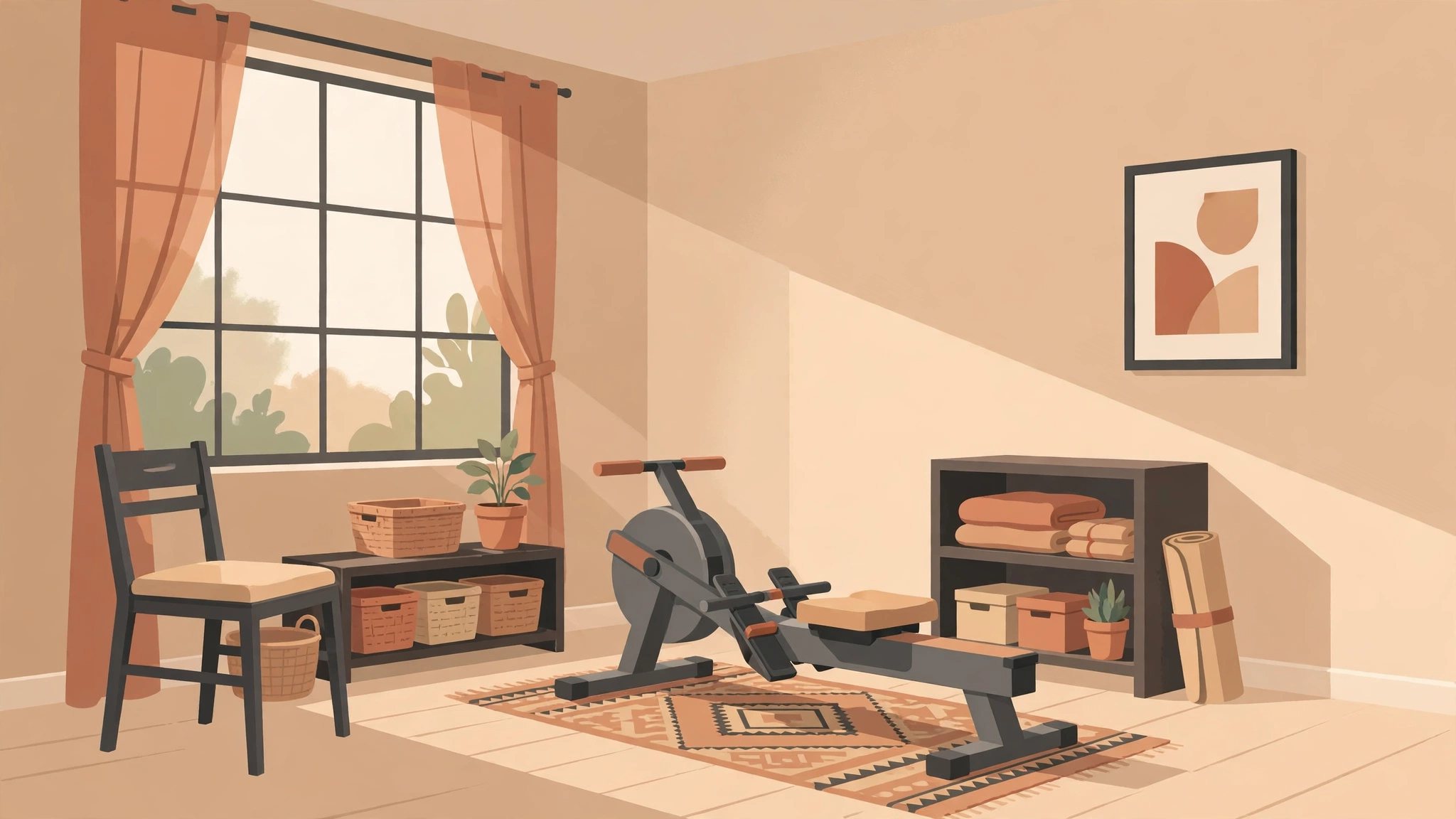
A compact rowing machine must fit the full rowing setup, not just a small storage rectangle. Check the space needed while rowing first, then compare how the exact model is permitted to be stored and how you will move it between those states.
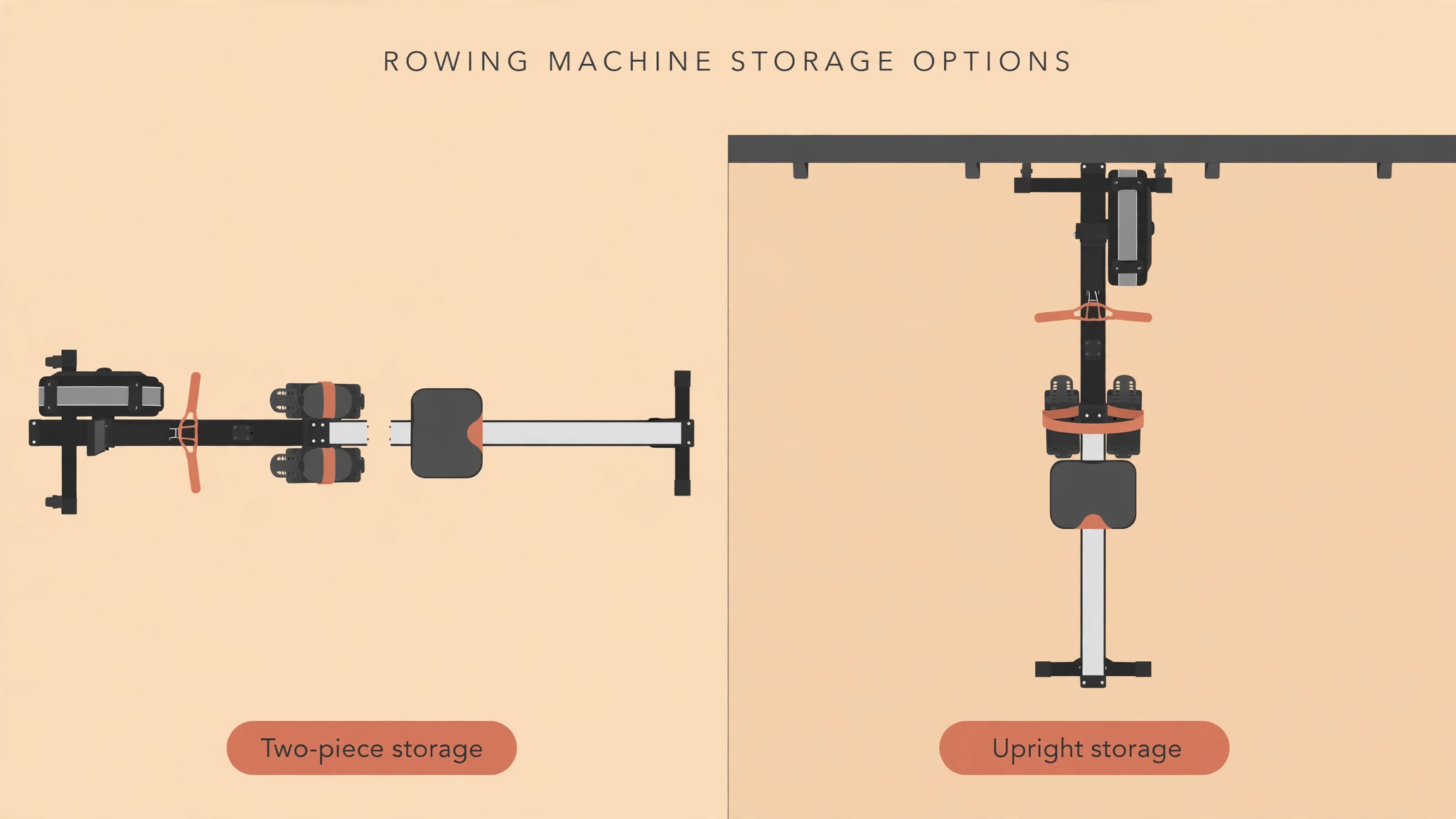
Two storage approaches can lead to very different apartment decisions: separating a machine into pieces, or securing it upright with a required anchor. Neither is automatically the more convenient choice. Your usable room, property permissions and daily handling route decide which is practical.
Measure the full rowing envelope first
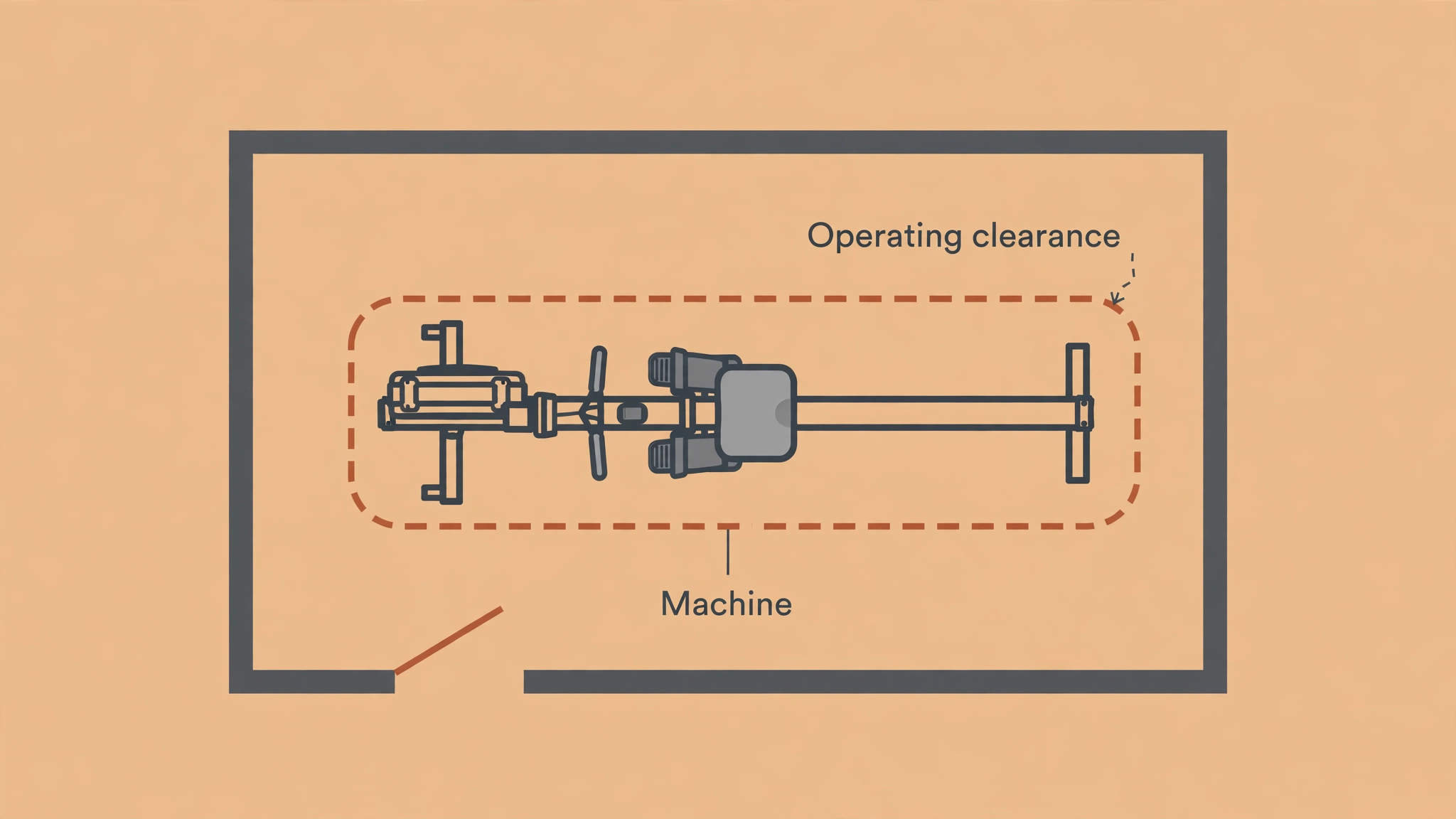
A rower’s machine length is not necessarily the complete area recommended for use. The user’s movement, getting on and off and the manufacturer’s clearance requirements need their own check.
Concept2 makes that distinction explicit for the RowErg: it lists an assembled size of 8 by 2 feet, with 9 by 4 feet recommended with clearance for use. Those figures belong to that model; they are not a universal room requirement for every rower.
Mark the selected model’s documented use area on your room plan. Include the position of furniture, access routes and anything that remains nearby during a session. If the operating arrangement is unsuitable, a clever storage feature does not resolve it.
This is especially relevant when comparing a long rower with a model marketed as compact. Decide whether “compact” means a shorter operating machine, a smaller stored shape or a more convenient handling routine. Keep those benefits distinct.
Compare separation storage with anchored upright storage
The two examples below illustrate different storage methods, rather than an overall ranking of rowing machines.
| Model and configuration | Documented storage method | Published stored dimensions | Key condition |
|---|---|---|---|
| Concept2 RowErg with standard legs | Separates into two pieces without tools | 25 × 33 × 54 inches | Figures are for standard legs; tall-leg storage differs |
| Hydrow Wave | Upright storage | 26.5 inches wide × 30 deep × 82 high | Model-specific Vertical Anchor required |
Concept2 describes the RowErg’s two-piece separation on its official product page. Hydrow states the upright dimensions and anchor requirement on the Wave product page. The Wave anchor is sold separately; do not substitute a storage kit intended for another model.
The RowErg is worth investigating when its full operating area fits and handling two pieces is practical. The Wave’s upright arrangement is worth investigating when its use area works, the required anchor installation is suitable and permitted, and the stored height fits the location.
The stored floor rectangles are only a starting comparison. One routine creates two pieces to position; the other retains a tall upright machine secured as instructed. A smaller number for stored floor area would not capture that difference.
Match the storage method to the property
Check attachment permission before relying on anchored upright storage in a rental. The manufacturer’s storage requirement remains in force even if the machine appears able to balance upright without the anchor.
If the required installation cannot be approved, do not count that upright position as available storage. Consider a model with a supported alternative arrangement, or a different place for the equipment. This guide does not prescribe anchors, wall modifications or improvised restraints.
For a two-piece method, verify the exact model’s instructions and dimensions for the storage arrangement. “Separates” does not necessarily mean each piece fits the shelf or closet you have in mind. Measure the actual intended location and leave the handling requirement visible in the plan.
Also check ceiling obstructions and the path used to reach storage. A low light fitting or a turn into a closet can matter even when the final floor rectangle appears large enough.
Plan the complete daily setup route
Walk through the proposed routine before ordering. For separation storage, identify where each piece starts, where the machine is assembled and where you would stand during the instructed handling sequence. For upright storage, identify the path between the operating and secured positions and the clearance needed for the instructed transition.
Treat this as a planning exercise, not a lifting or stability test. Product weight, shape, handling points and the user’s circumstances all matter; no universal handling promise is made here.
A rower that stays assembled may suit a room with a dedicated exercise strip. A stored rower may suit a shared room only if deploying it is a routine you are willing and able to carry out as instructed. Avoid choosing a storage method that requires moving several unrelated pieces of furniture each time.
Noise is another separate question. This comparison contains no measured apartment acoustic results, so it does not rank either example as a solution for downstairs neighbors.
Use a rower-fit worksheet before ordering
Record five answers for the exact candidate:
- What are its machine dimensions and separately stated use requirements?
- What storage method does the manufacturer support for this version?
- What are the full stored dimensions, including height?
- Does the method require an attachment or other condition the property can satisfy?
- Can the equipment follow its complete instructed setup and put-away route in this room?
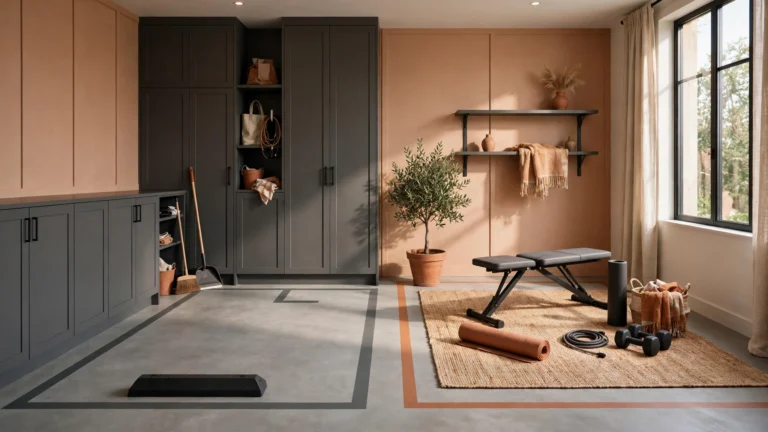
Use a small home gym floor plan to keep both the rowing area and storage location visible. If the operating area works but storage remains unresolved, keep looking. Choose a rower only when its whole routine fits the room, not merely when its smallest published rectangle does.