Home Gym Flooring: Choose a Removable Setup That Fits Your Room
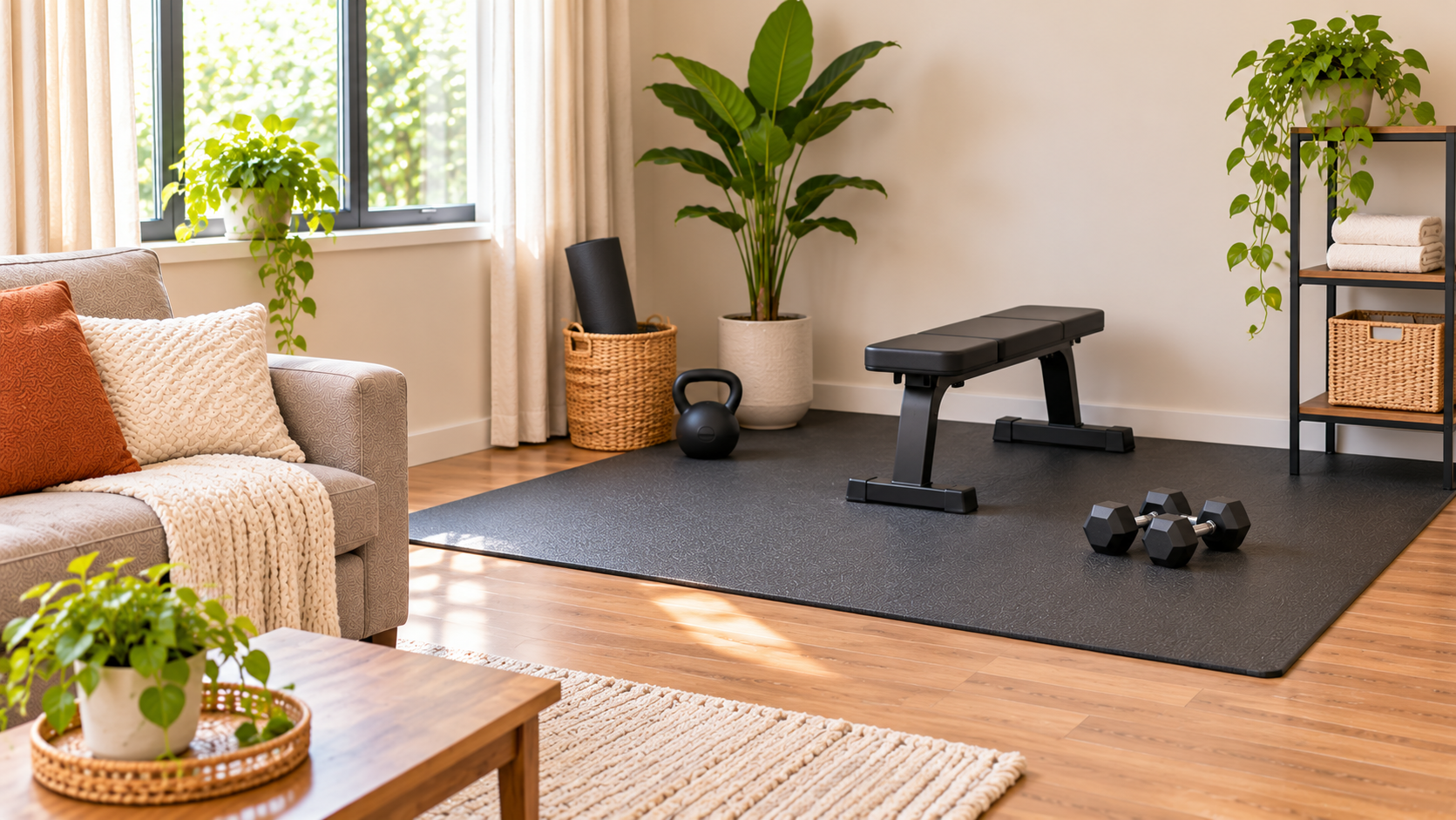
Choose home gym flooring by checking four things: the substrate the proposed system will sit on, your exercise and equipment use, the upkeep it requires, and your property’s restrictions. A suitable removable setup must work with all four.
Start with the floor you already have and the instructions for anything you plan to place on it. Then decide whether the proposed covering fits the room’s everyday use. If compatibility, placement or property permission remains unclear, resolve that question before purchasing.
Choose flooring by the room and its use
A removable exercise area needs a plan for placement, use and eventual removal. “Removable” describes a proposed nonpermanent arrangement; it does not establish how a covering will affect a particular floor finish.
Before comparing options, write down:
- Existing floor: Identify the surface and finish that the covering will contact.
- Intended use: List your exercises and equipment, including anything you move between sessions.
- Upkeep: Decide how you will clean the area, inspect underneath and handle the covering.
- Property limits: Check permission, fixing restrictions and any removal or restoration requirements.
Keep these answers beside you when reviewing home gym floor mats. A material name or an interlocking design does not establish suitability for your room. The exact system’s instructions need to permit your proposed arrangement.
Identify the floor underneath before covering it
Your existing floor is the current surface the covering will contact. It is not automatically the structural subfloor. “Substrate” means the supporting surface identified in the proposed flooring system’s instructions.
Record what you know before asking whether a covering is compatible.
| Check | What to record | What to confirm |
|---|---|---|
| Surface and finish | The visible floor material and any known finish or coating | Whether the proposed covering and backing may contact that exact surface |
| Floor condition | Visible wear, damage, dampness or other unresolved conditions | Whether the condition needs assessment before anything covers it |
| Existing care requirements | Available cleaning instructions and warranty restrictions | Whether longer-term contact or the proposed cleaning routine conflicts with them |
| Proposed contact layers | Everything intended to sit between the covering and existing floor | Whether both manufacturers permit the complete arrangement |
| Missing information | An unidentified finish, uncertain coating or unavailable instructions | Who can identify the floor or provide written clarification |
Ask the existing-floor supplier and the proposed covering’s manufacturer about compatibility. Approval from one does not answer every question for the other. Any proposed intermediate layer also needs confirmation; adding a layer is not a substitute for checking contact compatibility.
If you find visible moisture or damage, pause the covering decision and contact the relevant manufacturer, property contact or qualified site professional. Covering the area should not replace investigating the condition.
Carpet needs a separate compatibility check. If your existing surface is carpet, use dedicated carpet-specific guidance and the exact manufacturers’ instructions before proceeding; this guide does not provide a layering or installation method.
Match the surface requirements to your exercise and equipment
An exercise mat, equipment mat and room covering may serve different purposes. Category names alone do not establish whether a surface suits your intended activity or equipment.
Describe what will happen on the covered area, then check the corresponding requirements.
| Activity | Contact and movement demands to record | Equipment or product instructions to check | Questions to resolve |
|---|---|---|---|
| Floor exercise | Where your hands, feet and body contact the surface; how you move through each exercise | The mat or covering’s intended use and permitted supporting surface | Is it intended for these movements in the proposed placement? |
| Stationary equipment | Where the equipment contacts the floor and whether it remains in position between sessions | Required supporting surface, positioning and any permitted mat arrangement | Does the equipment manufacturer allow this complete setup? |
| Controlled free-weight use | Where you stand, handle weights and set them down | Applicable equipment instructions and the covering’s stated intended use | Is this use addressed, or does it require clarification? |
| A shared exercise area | Which activities use the same space and what moves during setup | Requirements for each item and each proposed arrangement | Can the area meet every requirement without an unapproved change between uses? |
Softness does not establish equipment support, structural suitability or permission to drop weights. A floor covering does not resolve a structural loading question or make weight dropping acceptable.
If instructions do not address your intended use, ask the relevant manufacturer before treating the arrangement as suitable. Keep comfort preferences separate from requirements that determine whether the setup can proceed.
Confirm how the flooring stays in place and comes back up
A setup is only practically removable if its permitted placement and removal methods fit your property. Check the complete process before choosing it.
- Confirm the placement method. Does the exact system permit loose or interlocking placement for your intended use?
- Check any fixing requirement. If the instructions require attachment, establish what that involves before purchase.
- Resolve finish contact. Confirm whether every proposed backing or fixing material is permitted against the existing finish.
- Read the removal requirements. Find out how the covering and any approved attachments must be removed.
- Check restoration obligations. Establish what your lease, property agreement or flooring instructions require afterward.
Do not select generic tape, adhesive or a protective layer to fill a gap in the instructions. Ask for the approved method for the exact arrangement.
Property permission and product compatibility are separate checks. A landlord’s permission does not establish compatibility with the floor finish. Manufacturer approval does not override a property restriction. Homeowners should also check the existing floor’s care and warranty requirements.
If an attachment or removal requirement conflicts with your property terms, pause that option until the conflict is resolved.
Plan coverage around the way the room works
Base coverage on your actual exercise movements and equipment instructions. Covering the whole room is not automatically necessary, especially when the room also serves as a bedroom, office or living area.
Sketch the room before choosing the covered area. Mark:
- The exercise zone and equipment positions.
- Each door’s movement.
- Everyday walking routes.
- Exposed covering edges.
- Access needed for cleaning, inspection and removal.
Compare the sketch with the relevant instructions. Check whether doors can operate as required and whether ordinary room access crosses an edge or depends on moving equipment. Do not move equipment partly off its approved supporting surface simply to make the layout fit.
For a hypothetical shared room, a proposed exercise zone might occupy the same area used to reach a cabinet. The planning decision is whether a permitted layout can preserve that access and the exercise requirements. If it cannot, revise the zone or intended room use before purchasing.
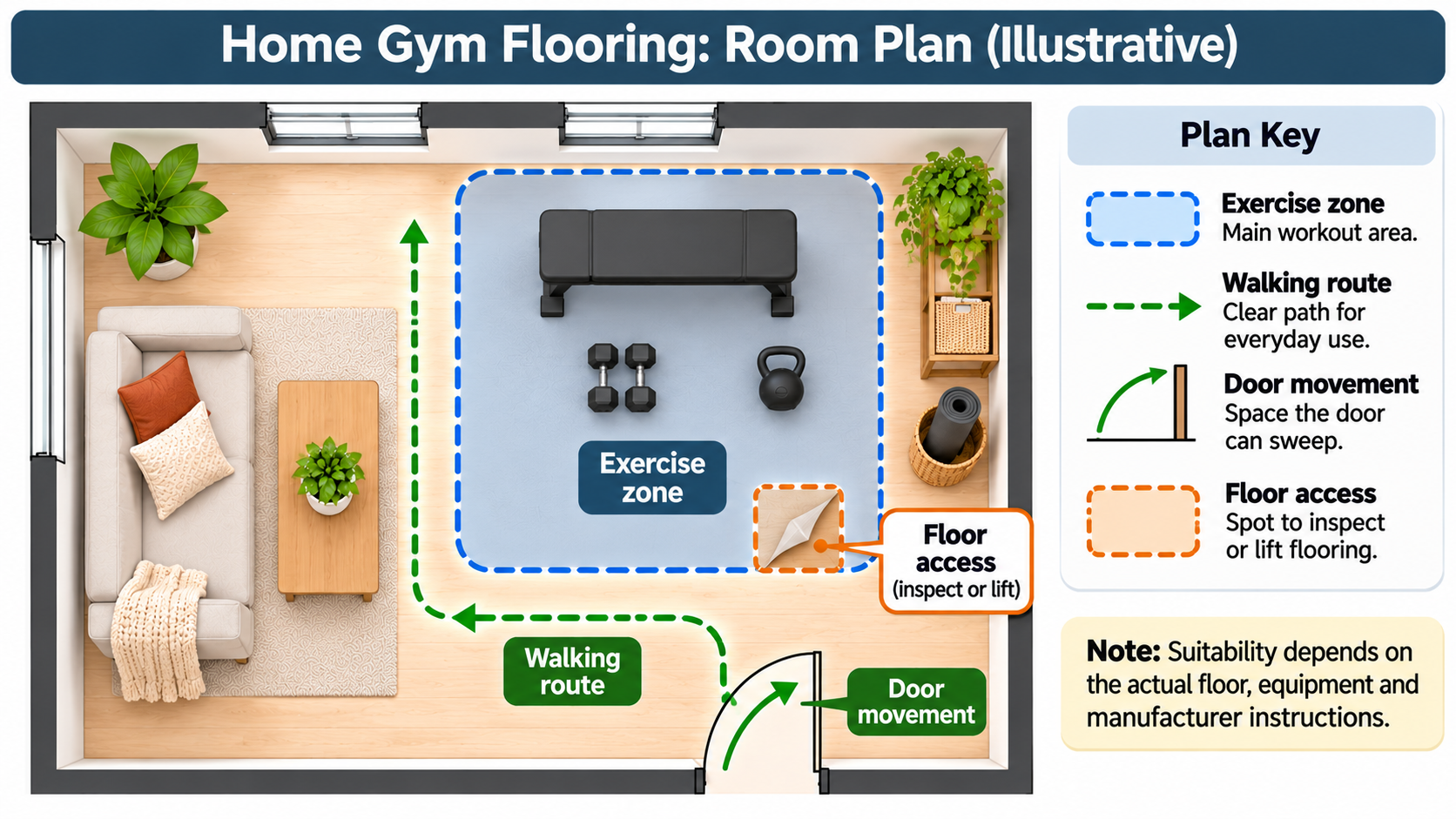
Use the same sketch to work out how you will reach the floor during upkeep. A layout that fits during exercise still needs a workable cleaning and removal routine.
Plan cleaning, inspection and storage before buying
Check the care instructions for both the proposed covering and the underlying floor. Do not assume the same cleaner or cleaning method suits both.
Build an ownership routine around these checks:
- Routine cleaning: Record the permitted products and methods for each surface.
- Spills: Find the relevant instructions for dealing with a spill on or beneath the covering.
- Inspection: Where the system permits lifting, plan how to access the floor underneath and what inspection guidance to follow.
- Equipment access: Establish whether cleaning or lifting requires equipment movement, and whether that movement is manageable under its instructions.
- Handling: Check the actual pieces’ handling requirements and your ability to move them as needed.
- Storage: Confirm the permitted storage arrangement and where the covering will go when removed.
Daily pack-away use deserves particular attention. A removable covering may still be awkward to handle or require storage space you do not have. Longer-term placement creates a different question: can you maintain access for the care and inspection the arrangement requires?
Write down the setup and pack-away sequence before buying. If you cannot explain where each piece goes and how you will manage it, the routine needs more planning.
Use a final compatibility checklist before you choose
Complete this decision record for the arrangement you are considering. Keep unknown answers visible rather than treating them as approval.
| Field | Record before proceeding |
|---|---|
| Existing floor | Identified surface and finish, condition, and confirmed contact compatibility |
| Intended use | Planned exercises and equipment, with applicable supporting-surface requirements |
| Approved placement | Permitted arrangement, including any fixing and finish-contact requirements |
| Upkeep access | Cleaning, spill response and inspection access under the relevant instructions |
| Storage and removal | Manageable handling, permitted storage, removal method and restoration obligations |
| Property permission | Applicable restrictions and any permission required for the exact arrangement |
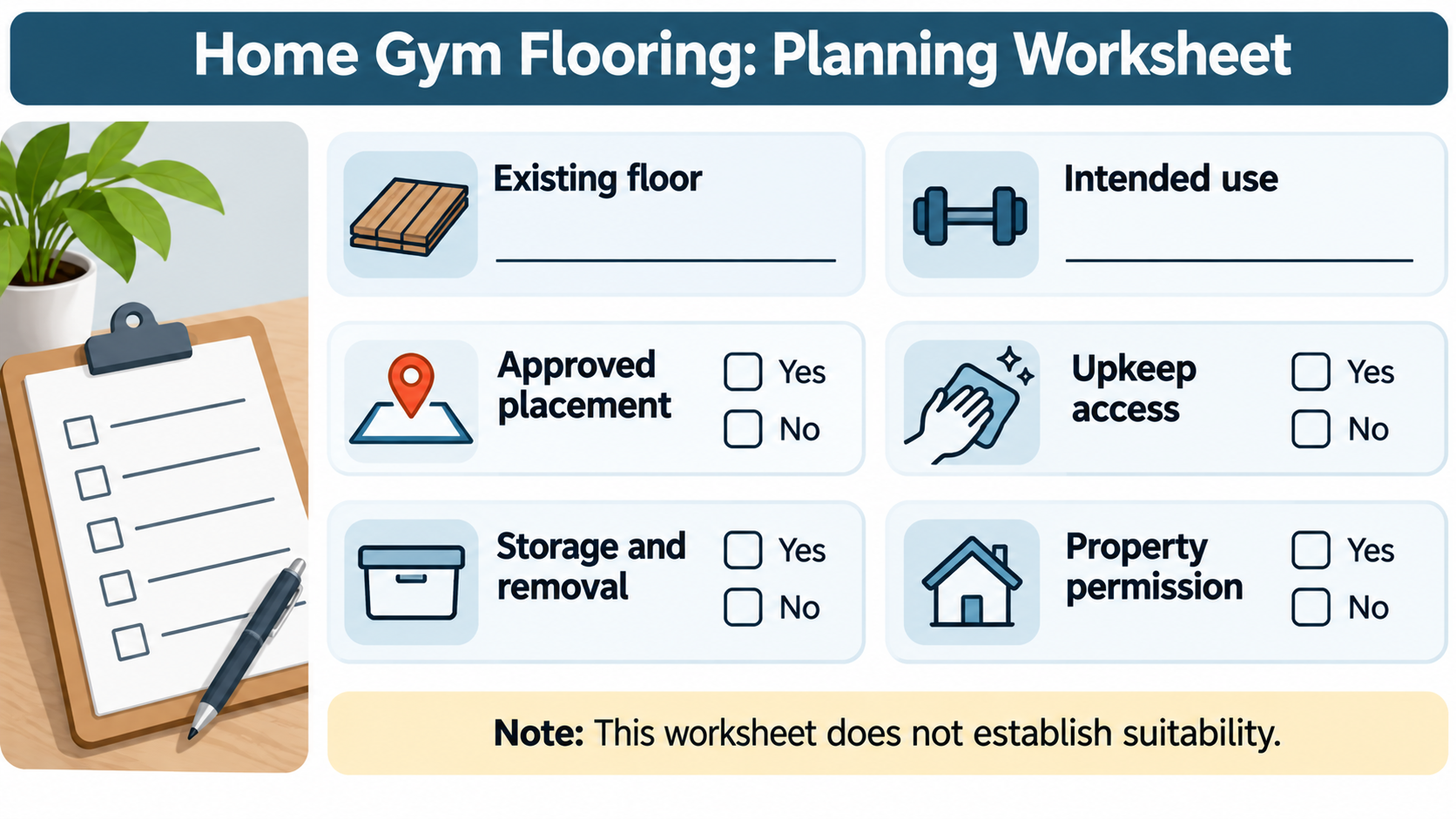
Take the completed checklist and the exact covering and equipment instructions to the relevant manufacturer or property contact. Resolve any unknown floor, moisture, compatibility or permission question before choosing the arrangement.