Walking Pad on Carpet: Check the Model Before Adding a Mat
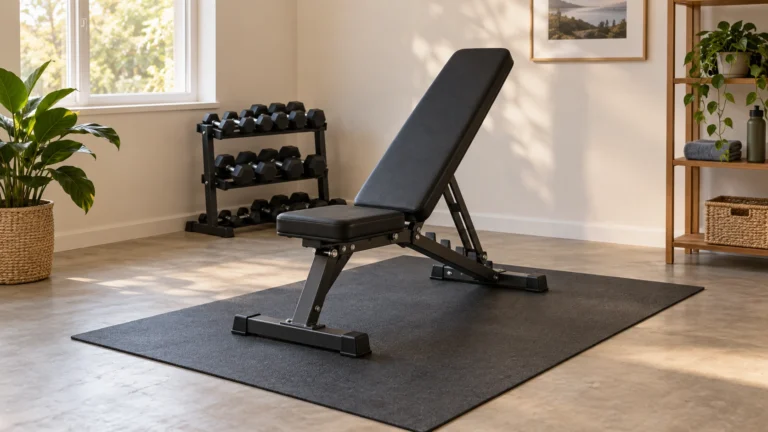
Do not assume a walking pad can sit directly on carpet. Start with the surface guidance for its exact model. A mat may be part of a manufacturer’s advice, but adding one does not automatically approve every carpet, machine and room combination.
The useful question is specific: can this walking pad, on this proposed surface system, be used as intended? Answer that before treating a convenient under-desk location as a finished setup.
Use the walking pad maker’s surface guidance
WalkingPad’s US support guidance advises against direct carpet use and discusses using a rubber equipment mat. It raises concerns about underbody airflow, carpet fibers and, for models using automatic control, sensing behavior.
Keep that guidance attached to its manufacturer and scope. It does not establish that all walking-pad brands follow the same rule, or that any rubber mat makes a particular installation suitable. Look up your model’s current manual and contact its support team when the general help page leaves a condition unclear.
Check the model, carpet and proposed mat together
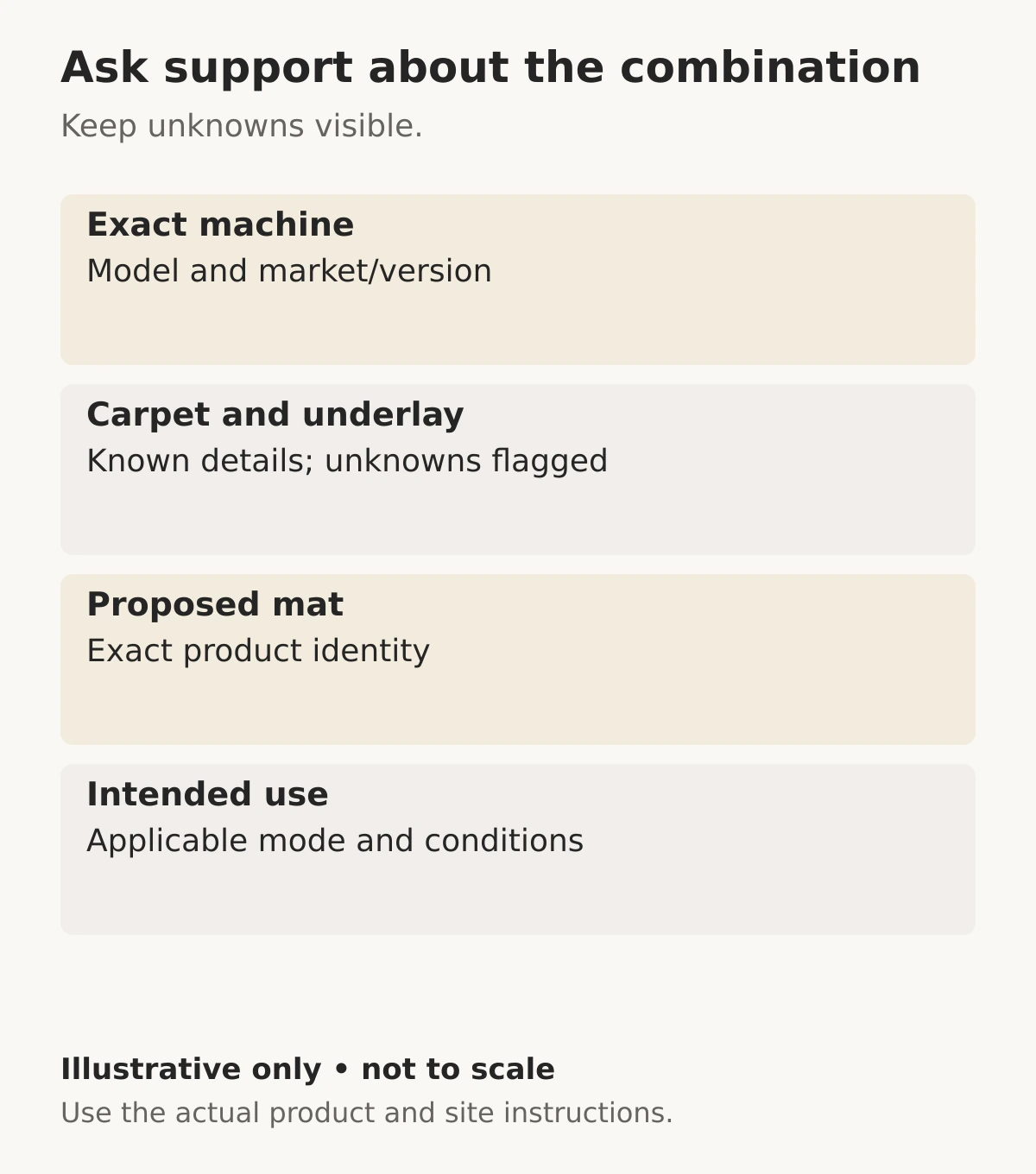
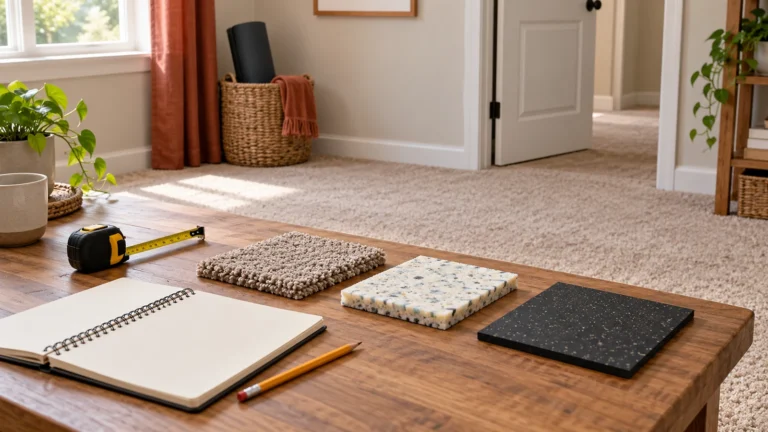
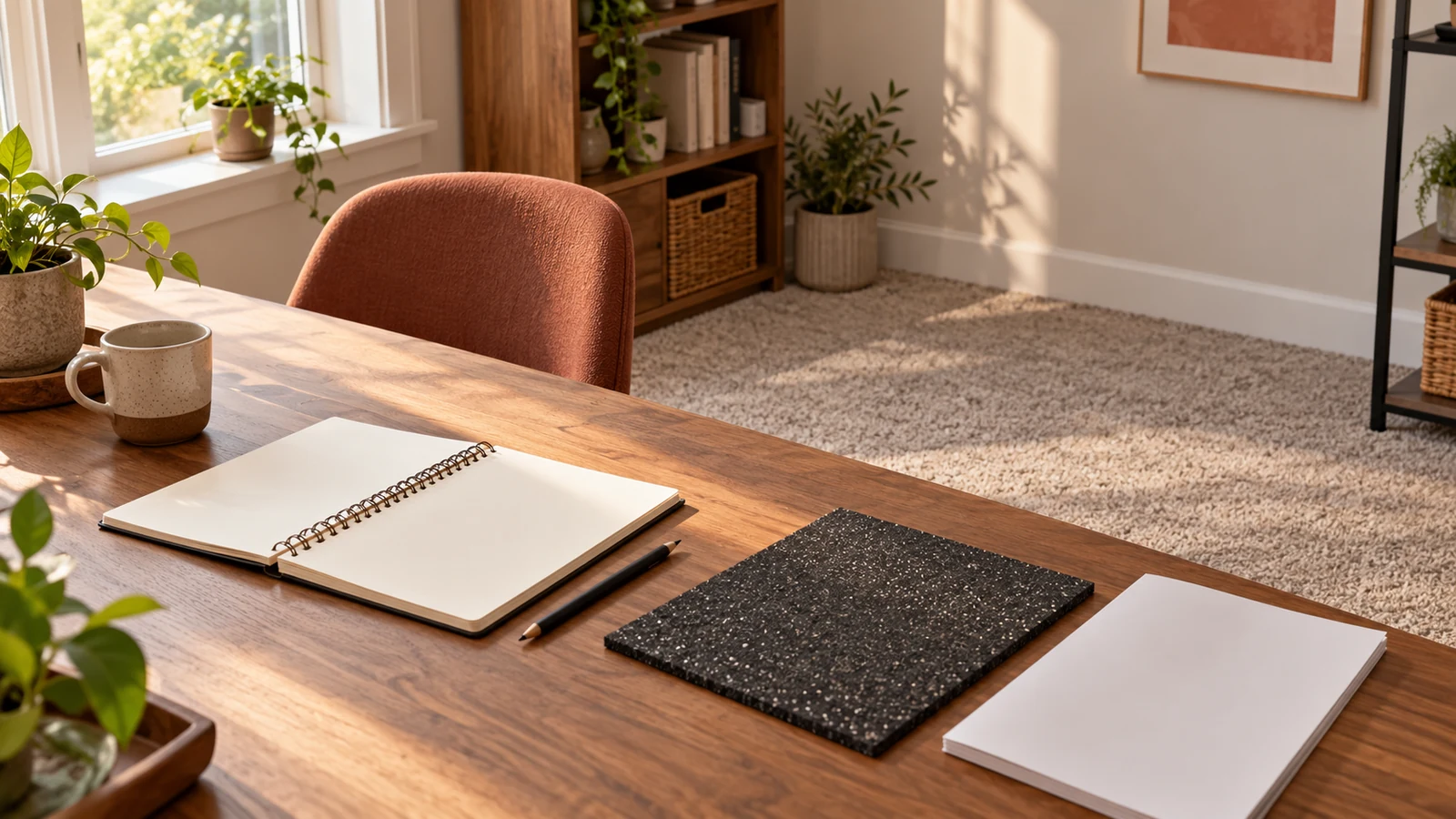
Make a three-part list: the exact machine, the existing carpet and underlay, and the exact mat you propose to add. Include product names where known and mark unknowns honestly.
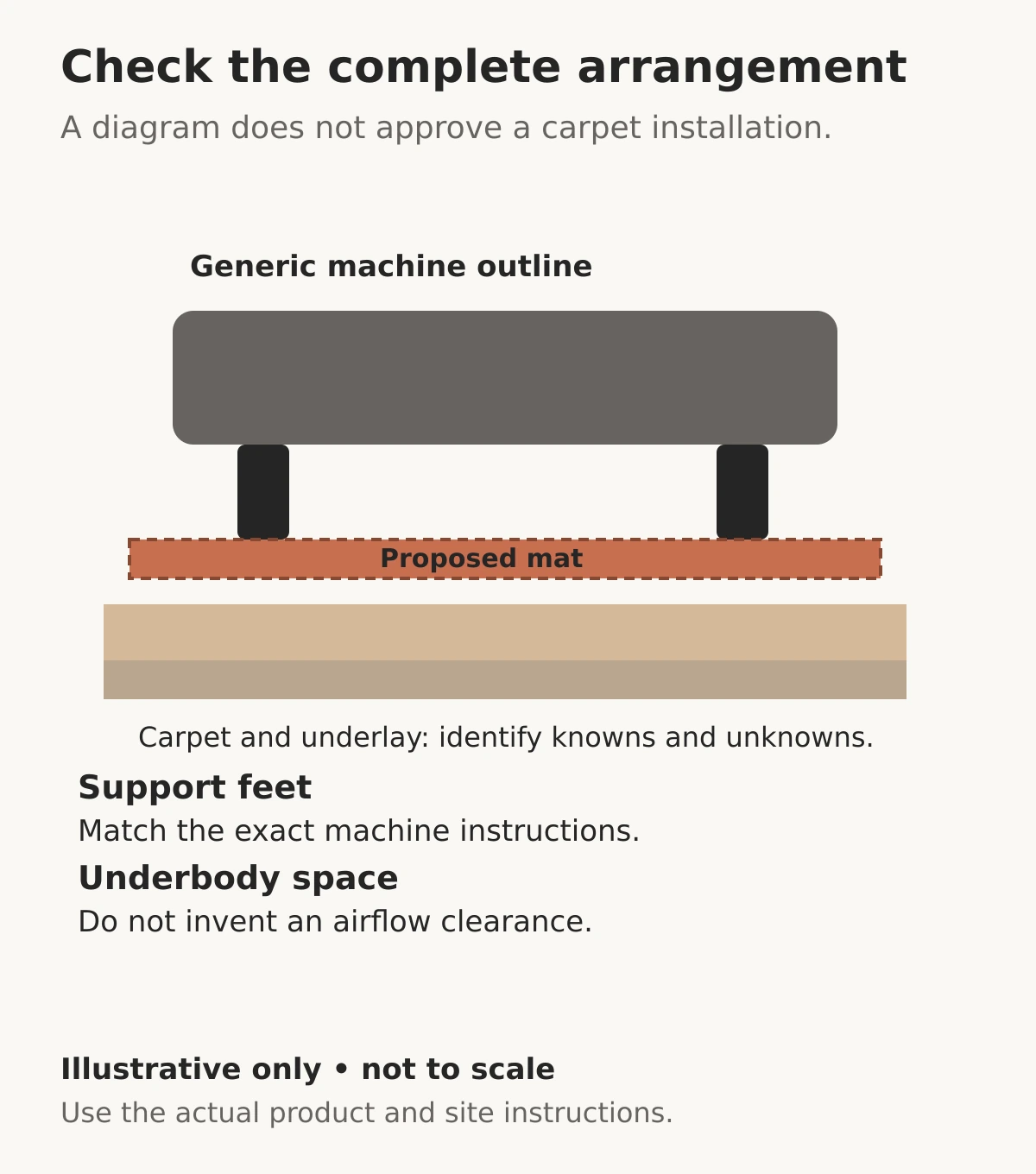
Ask whether the machine maker permits that combination and what surface or support requirements apply. Separately, ask whether the mat is compatible with the underlying floor materials. A mat advertised for equipment protection is not automatically approval from the walking-pad maker.
Do not create an improvised stack to obtain a desired height or apparent firmness. If a platform or another layer is proposed, it becomes part of the system that needs confirmation. Do not invent ventilation gaps or support dimensions.
Ask a question support can actually answer
Send support a question it can answer:
‘I have [exact model and market/version if known]. The room has [carpet and underlay details, with unknowns stated]. I propose [exact mat]. Is this arrangement approved for the intended use? Please identify the applicable surface, support and airflow instructions, and whether this model’s operating mode adds any restrictions.’
Attach relevant photos if requested, while recognizing that a photo cannot establish all hidden floor details. Save the response and the manual version. If support answers only ‘use a mat,’ ask whether that response covers the specified combination rather than assuming it does.
There is no need to seek a universal carpet rule when the manufacturer can address the actual setup.
Keep floor approval separate from desk fit
Surface compatibility is one decision; fitting the walking pad under a desk is another. After the surface is confirmed, assess the final arrangement against the machine’s operating instructions and your desk setup. Adding a mat changes the physical arrangement you measured, even though this guide does not prescribe a height adjustment.
Include the route for moving the machine and the place it will be stored. Follow the exact model’s handling and storage instructions. A folded or stored configuration is not evidence that the operating location meets its requirements.
Keep the floor record with those model instructions so the next move does not erase the original conditions of approval.
Know when to change the location
Use three outcomes. Confirmed: the applicable instructions or support response cover the actual arrangement and you can meet its requirements. Unresolved: key carpet, mat or model conditions remain unanswered. Excluded: the maker rules out the proposed use.
For an unresolved or excluded location, ask about a permitted alternative surface or choose a different location. Do not begin using the machine as an experiment to establish compatibility. Recheck if the carpet, mat, machine or operating conditions change.
A quiet first session or a machine that appears level does not replace the missing manufacturer answer. The goal is a setup you can explain from its documentation, not a generic promise that carpet is always fine.