Budget Adjustable Dumbbells: Compare the Complete Pair
The cheapest adjustable dumbbells are a poor bargain if the price buys one unit or the pair stops below the weights you already use. Set a spending limit for a complete, useful pair first. Then compare the starting cost with the cost of the configuration you actually want.
Two documented options illustrate the choice: PowerBlock Sport 24 has a lower observed pair price and a fixed lighter range; REP QuickDraw starts at a higher observed price but offers separately purchased expansion. Neither is a universal winner. This guide compares manufacturer information, not hands-on testing or every model on the market.
Budget for a pair at the weights you need
Before opening another sale listing, write down three requirements: the lightest weight you want, the smallest useful change between settings, and the heaviest weight you expect to use for your planned exercises. Record these per hand, not as the combined weight of both dumbbells. A pair labelled 30 lb per dumbbell is a different purchase from a pair weighing 30 lb altogether.
Use loads you know you need rather than a generic “beginner” recommendation. Someone buying lighter weights for a few specific exercises may be satisfied with a modest ceiling. Someone already using heavier dumbbells should eliminate a lower-capacity pair before comparing discounts. You do not have to predict a precise training timeline to recognize that mismatch.
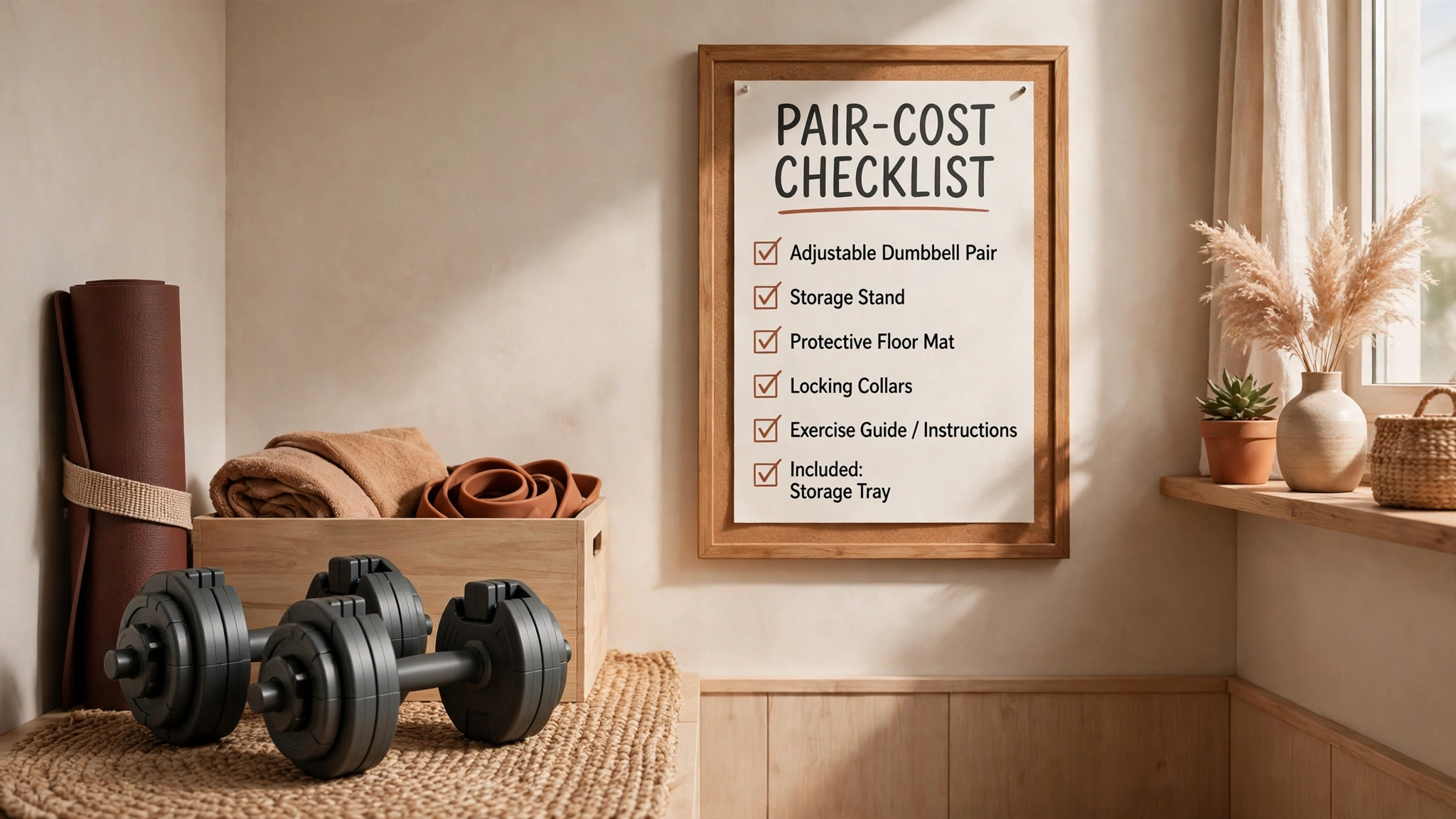
Next, check what the listing includes. Is the offer for one dumbbell or two? Does the chosen configuration include the necessary plates and any supplied cradles? Are photographs showing expansion plates or a stand sold separately? Treat the selected product description and order summary as the purchase, rather than assuming everything pictured is included.
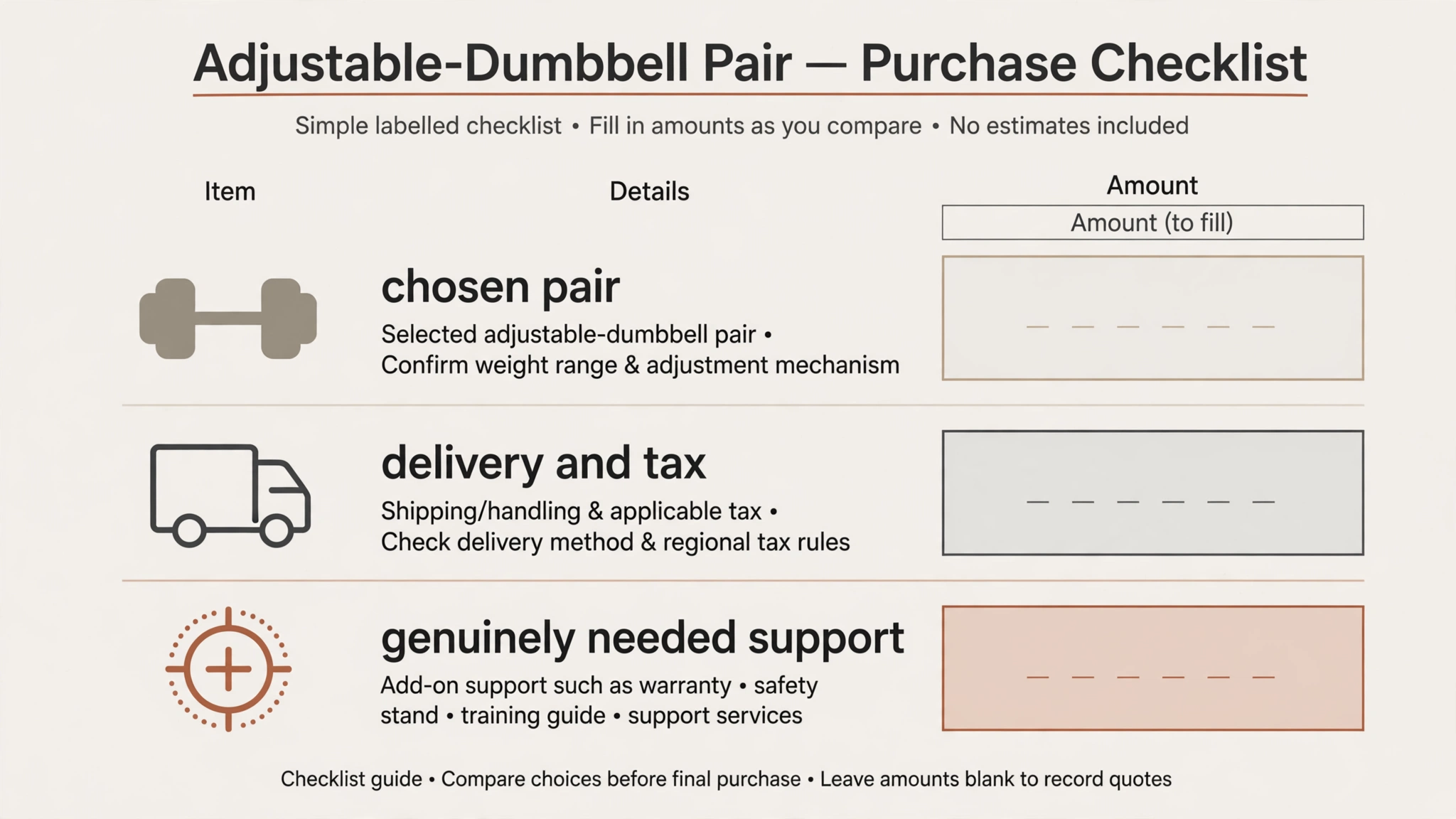
Your initial budget should cover the chosen pair, mandatory delivery charges and taxes, plus any support or accessories genuinely needed for the intended setup. Optional furniture is a separate decision. Do not spend the entire cap on a headline price while leaving required costs uncounted.
Two documented starting points, not a tested ranking
The prices below were displayed on the manufacturers’ US pages on 20 October 2026. They are product-page observations, not complete delivered quotes. Recheck the exact pair configuration and checkout total before paying; do not assume the same offer applies to another weight option.
| Starting pair | Observed US page price | Manufacturer-listed range per hand | Main budget tradeoff |
|---|---|---|---|
| PowerBlock Sport 24 | $219, sold as a pair | 3–24 lb, in 3 lb steps | Lower observed starting price here, but the 24 lb ceiling cannot be expanded. |
| REP QuickDraw, 30 lb Pair | $335.99 with 30 lb Pair selected | 5–30 lb for this starting configuration | Higher observed starting price; compatible add-ons can take it to 40, 50 or 60 lb per hand, at additional cost. |
Sources: PowerBlock Sport 24 and REP QuickDraw LB. The QuickDraw base price is not a price for the fully expanded 60 lb pair.
Sport 24 is a candidate when the lighter range is the point of the purchase. Its 3 lb steps and 24 lb maximum are clear boundaries to compare with your requirements. If your planned exercises already need more than 24 lb per hand, a lower price does not fix the capacity mismatch. PowerBlock also states that Sport EXP expansion kits do not work with Sport 24, so do not buy it expecting that upgrade route.
The QuickDraw 30 lb pair offers a different compromise. Its present range must still work for you, and you need to price the compatible plates required for any higher target. “Expandable to 60 lb” describes a path to another configuration, not extra weight included with the 30 lb pair. No current delivered expansion-kit quote is assumed here.
These examples support conditional choices, not “best value” awards. Neither page tells us how the dumbbells will feel in your hands, how long you will keep them, or which pair will have the lowest lifetime cost for your household.
Keep an expansion ledger before paying for potential
Compare two totals separately:
| Cost question | What to put in the ledger |
|---|---|
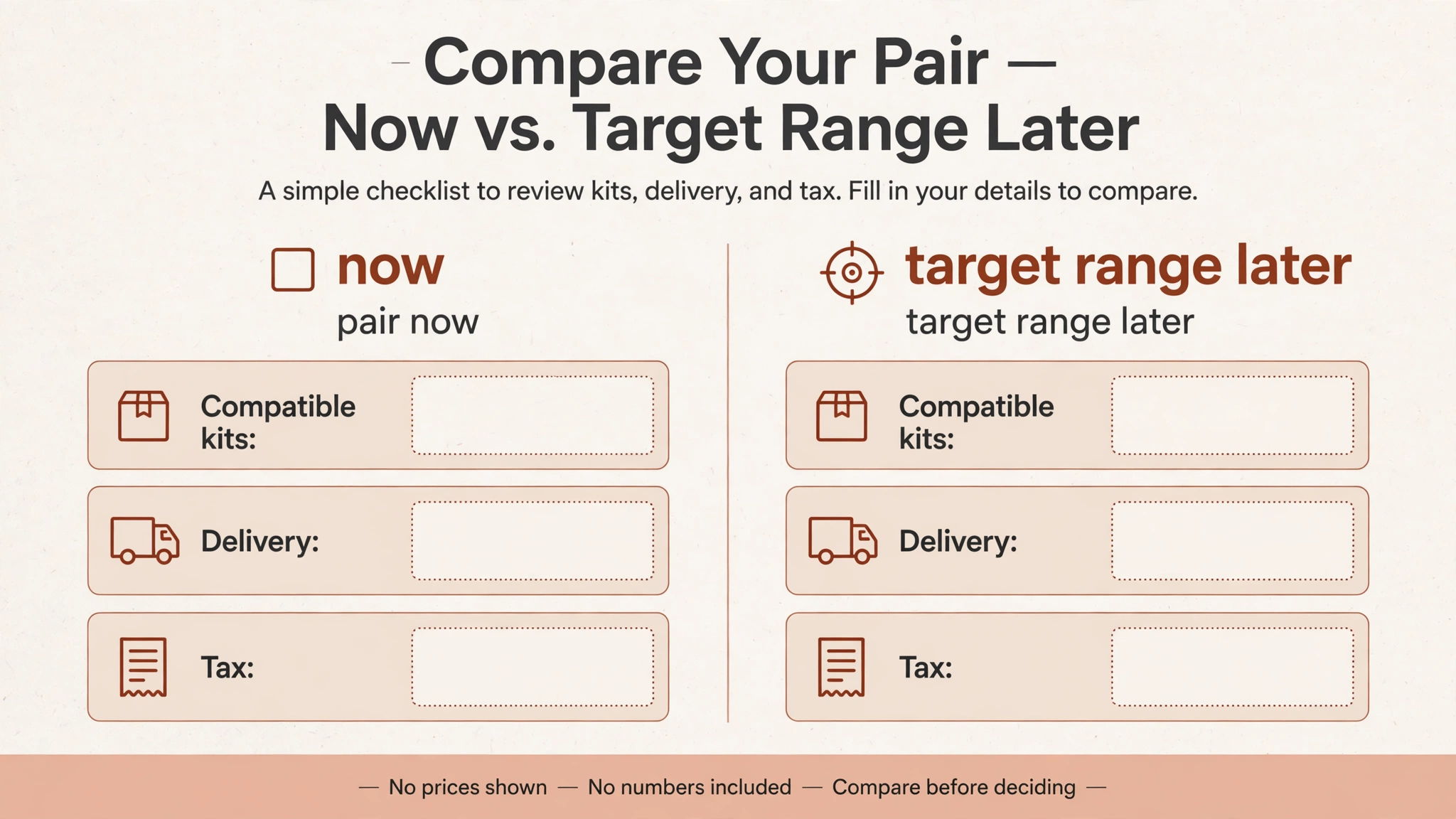
| Can I afford the useful pair now? | Exact selected pair + mandatory delivery and tax + genuinely required support or accessories. |
| Can I afford the target range later? | Initial setup cost + the exact compatible expansion kits needed to reach that range + additional charges that apply to those orders. |
Leave an amount blank until you have a real quote. An unknown expansion price is not zero, and a promised future discount is not part of today’s budget. If the upgraded setup is what you need immediately, compare its complete current configuration rather than treating the lower base price as the relevant total.
Consider two illustrative buyers. Maya wants a lighter pair for exercises whose intended loads all fall within Sport 24’s documented range. She has no current requirement beyond its ceiling. A nonexpandable pair can be a deliberate choice for her; paying more for unused expansion potential is not automatically better value.
Daniel already uses more than 24 lb per hand for an exercise he wants to keep doing. Sport 24 fails that requirement regardless of its lower starting price. If he investigates QuickDraw, he should price the configuration that meets his actual load needs, not assume the 30 lb base will do. If that complete quote exceeds his cap, waiting or reconsidering the purchase is more useful than buying an inadequate pair just to stay under budget today.
Neither example predicts how quickly a person gains strength. The decision turns on known intended use, the listed ceiling and the actual cost—not an assumed resale value or a claim that one pair lasts everyone forever.
Measure the setup you will store, not just the handle
A storage problem can become an unplanned expense. Check both dumbbells in their stored configuration, including cradles or nested weights, and leave workable access for the adjustments described in the exact manufacturer instructions. Do not turn a bare-unit measurement into a ready-made two-unit layout.
For example, PowerBlock lists Sport 24 at 10 × 5.5 × 5.5 inches per dumbbell. REP lists the QuickDraw cradle at 20.6 inches long and 8.45 inches wide, while the 30 lb dumbbell itself is 12.2 inches long. Those measurements describe different objects. Comparing the Sport 24 unit length with the QuickDraw handle assembly alone would not tell you what each complete pair occupies when parked.
Use those manufacturer dimensions as screening information, then measure the actual intended arrangement. They do not establish a support’s load suitability or a universal operating clearance. If your plan depends on omitting a supplied component or substituting household furniture, confirm the exact requirements rather than assuming the cheaper arrangement is suitable.
A dedicated stand is not automatically part of every budget, but leaving one out is not proof that no suitable support is needed. Price the arrangement that the specific equipment and your room require. For broader layout and handling decisions, our guide to choosing adjustable dumbbells for a small room covers the general selection process; keep this comparison focused on what the setup costs.
Make the purchase conditional on the final configuration
Shortlist a lighter nonexpandable pair when its starting weight, steps and ceiling match your intended use, and its complete delivered price fits your cap. Reject it when the ceiling already falls short. A low sticker price is not a reason to compromise a requirement you can identify now.
Consider an expandable base when its present range works and the separately quoted upgrade path makes sense for your target. If the price of the actual needed configuration is unknown or over budget, pause rather than counting future plates as included.
Before paying, confirm the exact model and pair option, included components, final delivered total and current return terms. For a used offer, unresolved condition or missing parts need resolving before it becomes a budget recommendation. Obtain and follow the exact manufacturer instructions; this comparison does not provide adjustment, repair or dropping procedures.
Keep the final order summary beside your load requirements and cost ledger. If the pair, useful range and complete price all agree, you have a purchase to evaluate. If one is still uncertain, settle that question before committing the budget.